As studies raise alarms about hidden chemicals, the founder of Nasara Organics shows why safer, more open products are becoming a real edge in the business of Black hair care
For generations, hair care has been a ritual of love and togetherness in Black households. Mothers, aunts, and grandmothers passed down what worked, and few people stopped to ask what was inside the jar or the bottle. Now the research is making it hard to look away. Studies show that many hair products marketed to Black women contain endocrine disruptors, including phthalates, which are chemicals that can interfere with the body’s hormones. Researchers have also found that up to 84 percent of the hazardous chemicals in certain hair care products never appear on the label, and words like “organic” and “natural” do not guarantee a product is free of toxic preservatives. Even some synthetic and natural hair extension fibers have tested high for lead and other harmful volatile compounds. For Black women who want to protect their health, and for business owners who want to serve them well, the message is clear: the old way of shopping for Black hair care products is no longer enough.
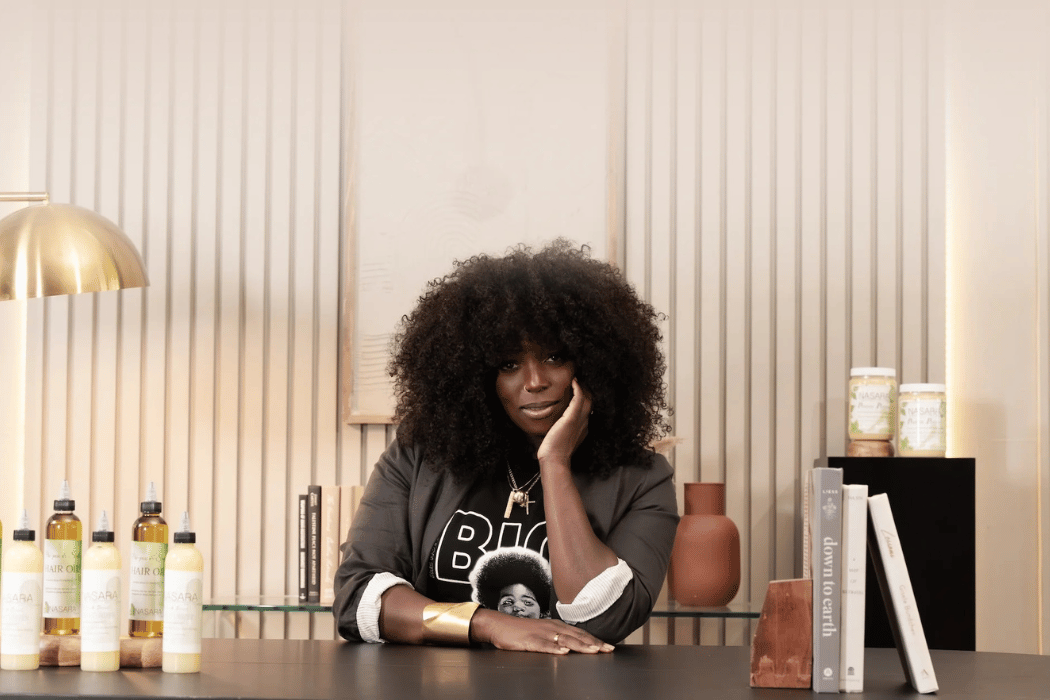
That is where Khy Elijah comes in. Elijah is the founder of Nasara Organics, a Black-owned hair care brand she launched in 2015 with a simple belief that Black women deserve products that care for their health as much as their hair. A stylist for more than 20 years, she has built her reputation on safe ingredients and careful research, and she is turning that approach into a growing business with plans to reach women around the world.
A Calling That Started at Age Five
Elijah’s story begins in Orange, New Jersey, where her grandmother, Dorothy Elijah, raised her from the time she left the hospital until she went off to college. Hair was the center of family life in her home. She watched her aunts, her cousins, and her grandmother get their hair done, and she learned to braid when she was only five years old. She grew up in the era of hot combs in the kitchen, and she says that gives her a deep understanding of the role hair has played in Black women’s lives for a very long time. “I’ve always been very talented at being able to care for hair,” she says. “Hair in the Black household was the centerfold of spending quality time and getting to know myself as a young female.” She is quick to point out that she never set out to build a business. “I didn’t really identify it as an opportunity.” She simply kept doing what she had always known.
The Gap Nobody Else Wanted to Fill
After college, Elijah had trouble finding a job, and then a brand-new natural hair salon opened in her area. She applied and joined a team of about 13 stylists. Almost none of them wanted to work on natural hair, so she stepped up. “I said, ‘I’ll do the natural hair. Just send everybody to me,’” she remembers. That choice changed the direction of her career. Clients began coming back every week, every other week, or every month, and she realized that no one was really caring for the natural hair underneath the wigs and weaves. Many women were stuck between relaxed hair and natural hair, with no one to show them what to do in that in-between space, and too much heat, tight styles, and over-processing were leading to hair loss. Elijah says even hair school had not taught her how to care for Black hair in particular, so she started studying, testing, and keeping only what worked. Three of those solutions, a protein treatment, a moisturizer, and an oil, became the first Nasara Organics products. She made the early versions by hand in her grandmother’s kitchen with simple ingredients she grew up with, like eggs, honey, and mayonnaise, and her clients in New Jersey served as her testers. “They started as solutions,” she explains. “I didn’t know it was going to be a product line. I didn’t know it would grow to reach women all over the world.”
What Hidden Ingredients Taught Her
As the brand grew, so did Elijah’s understanding of what was inside many of the most popular products. She believes the education around relaxers fell flat, and that even the stylists who trained her never talked about the ingredients or about endocrine disruptors. “We were just doing what we were taught by those who came before us,” she says. Today, she sees that changing. Science can look back and connect long-term chemical exposure to serious health problems, and social media lets women share what they learn in minutes instead of waiting for word to travel from salon to salon. “We are educated, and we are looking things up,” she says. In her view, many harsh relaxers, greases, and over-the-counter quick fixes are sold in Black communities and leave behind far more than healthy hair on the scalp. When she set those ingredients aside at Nasara Organics, she says she saw changes beyond the hair itself, including lower inflammation among the people she serves. “The healthier you are internally, the healthier your hair will become outwardly,” she says.
Safer Ingredients as a Business Strategy
This is where Elijah’s story turns from hair care to smart business. She did not stop at good intentions. She hired a top chemist and explained exactly what she wanted each product to do and what she wanted it to stand for, and her chemist refuses to create formulas that could harm Black hair, even when a client asks for them. Elijah is also building Nasara Organics to meet European Union standards, which are among the toughest in the world for hair and health products. She says that standard, not the U.S. one, is the foundation for the brand’s future, and it is also what makes selling overseas possible. “I truly believe that people should have products they can depend on, and they should not have to worry about them changing every five to ten years,” she says. That promise is rare, and it shows a lesson every owner can use: trust is a product feature. Shoppers now read labels, scan ingredients, and compare brands, so companies that are open about what goes into the bottle earn a kind of loyalty that discounts cannot buy.
What Smart Shoppers Should Look For
Because “natural” does not always mean safe, Elijah offers practical advice for anyone shopping for Black hair care products. She reads ingredient lists closely and looks up anything she does not recognize. She also cautions that not every ingredient with a scary name is harmful, since some parabens are safe, so the real goal is learning which ones are and which are not. Her internal medicine doctor shared an ingredient-scanning app with her that rates a product from zero to 100 and tells the shopper whether it is good or bad for the body. Elijah admits that no one can list every ingredient to avoid, because new ones appear all the time, so her best protection is a set of simple tools and the habit of checking before buying.
A Hero Line Four and a Half Years in the Making
Nasara Organics is now preparing its “hero line,” made up of two shampoos and two conditioners that work together as a moisture bonding system. The products are designed to go inside the hair strand, replace lost moisture, and help hair grow stronger from within. Elijah did not rush the process. She spent four and a half years testing the formulas on herself, her family, and her clients, and she wants every bottle to carry the 20-plus years of experience she has gained behind the chair. She pictures the busy Nasara woman who has little time for her hair but still makes time for it, and she designed the line with plenty of slip and strong detangling for soft curls and for coily, kinky textures alike. The care continued all the way to the packaging. This past May, she traveled to China with her designer and spent about a week visiting 11 to 13 factories to find the right partner. She also plans to teach customers about the ingredients and how the products work before the launch, because she says education is key.
Taking Nasara Organics Around the World
Elijah has a clear five-year goal. She wants Nasara Organics stores in London, Africa, and Canada, along with more locations across the United States. On her trips to South Africa and other parts of Africa, women kept asking where they could buy her moisturizer and oil, and she says quality Black hair care is hard to find there. Tariffs also make it tough for overseas supporters to order from the United States, even though a large part of the brand’s support comes from them. Her plan includes more stores and warehouses around the world, and she sees them as a way to create jobs. “We want to create jobs and make sure that we are a positive part of the infrastructure,” she says. As women ask harder questions and expect honest answers, brands that hide behind vague labels will lose ground, while brands that choose safer ingredients, share what is inside, and teach their customers will win trust. Elijah began with a comb, a kitchen, and a calling, and today she leads a company that shows safer, more transparent products can be a true competitive advantage.
To learn more about Nasara Organics, visit NasaraOrganics.com, or follow the brand on Instagram at NasaraOrganicsUSA and on TikTok and YouTube as Nasara Organics.