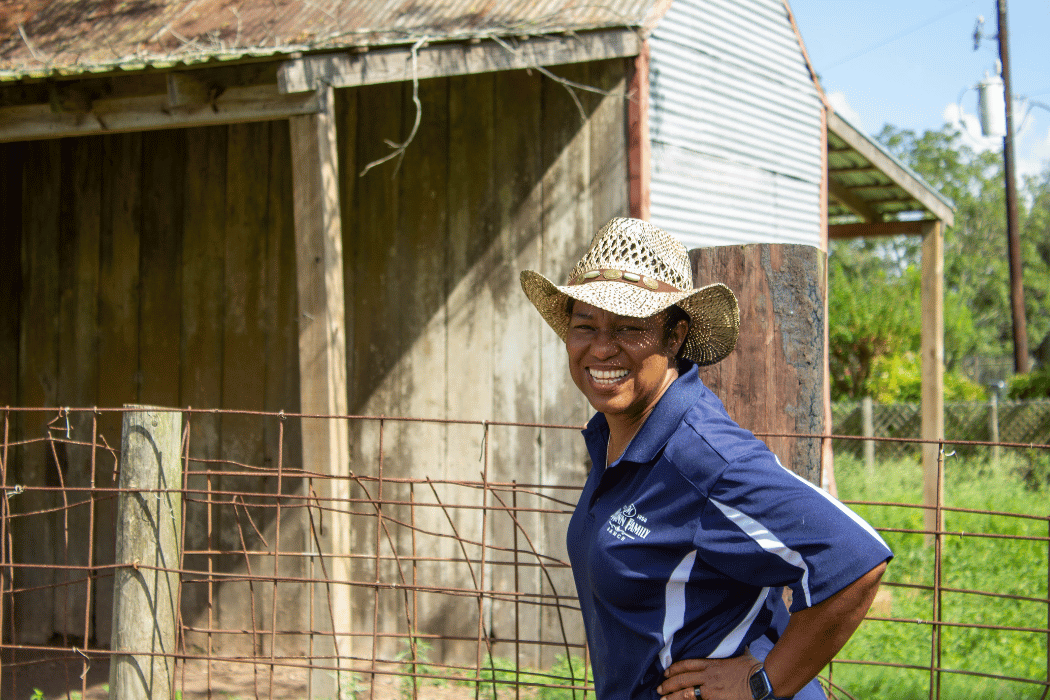
A retired Houston Astros executive spent 33 years in the oil field and the front office. Now she is buying bulls, building ponds and keeping six generations of Black-owned land in her family.
Diverse farmers are the backbone of America’s food system—yet they remain underrepresented, underfunded, and often overlooked. With Black, Hispanic, Native American, and women farmers leading the charge in sustainability, entrepreneurship, and community impact, their stories are more important now than ever. This series will spotlight their challenges, celebrate their successes, and showcase the innovations shaping the future of farming.
One day, Paula Harris walked outside her parents’ home in Egypt, Texas, and asked herself a hard question. What is going to happen to all of this?
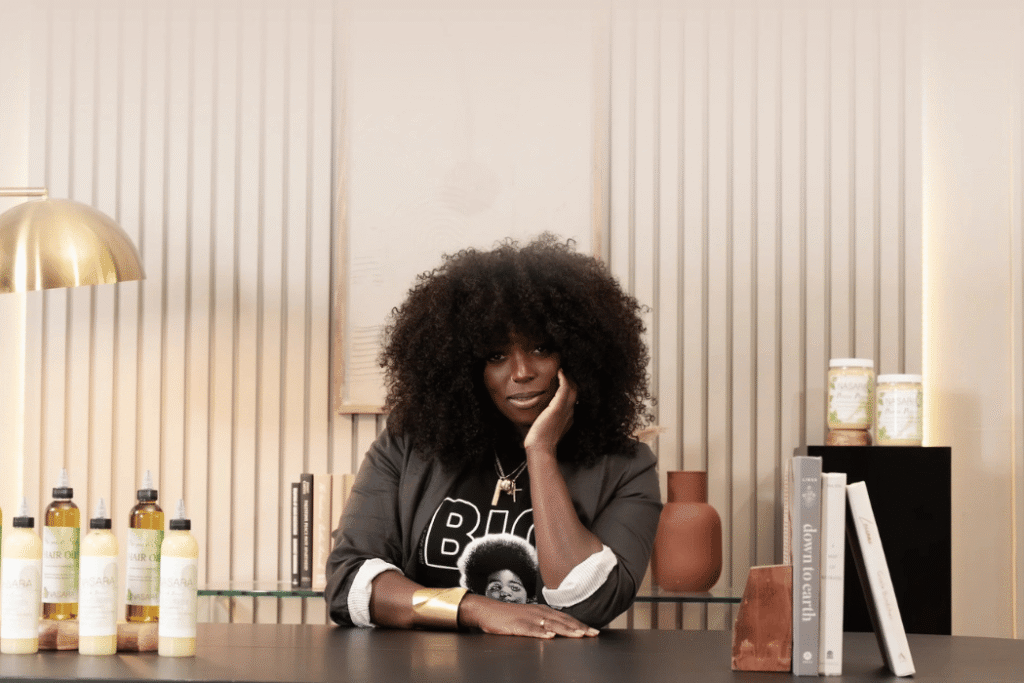
Harris is the retired Senior Vice President of Community Affairs for the Houston Astros and the Executive Director of the Astros Foundation. Before that, she spent 33 years at Schlumberger, where she started as a field engineer logging wells in the Gulf of Mexico. She sits on corporate boards and has been featured in Black Engineer, Graduating Engineer, and Money Magazine. Yet in that moment on the ranch, none of those titles mattered. Her father was frail. Her aunt was 99 years old. No cousins came down to help. The family ranch was running on autopilot, and things were being missed.
So, she made a choice. “If it’s to be, it’s up to me,” she said.
A $200 Deed and Six Generations of Black-Owned Land
Harris has known this land her entire life. When she was a child, her parents did not take her on vacation. When they went away, she went to her grandmother’s house in Egypt. Her parents moved back to the ranch about seven or eight years ago, when her father began to get frail. At first, a hired hand ran the place, and she came on weekends to cook and visit. She was not thinking about the future.
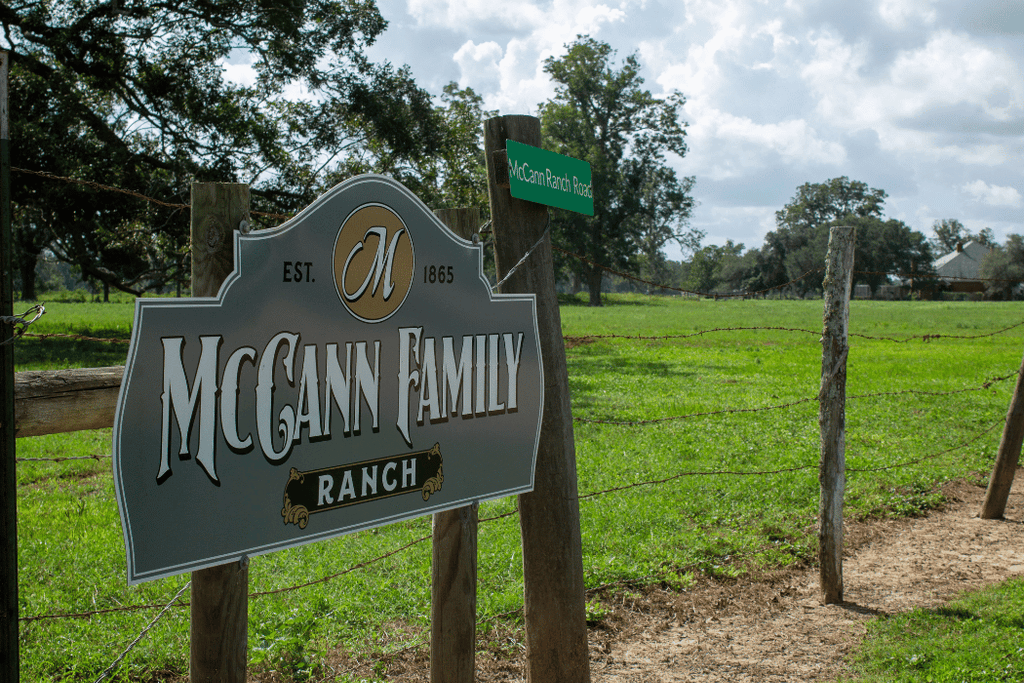
That changed when she started digging into her family history on Ancestry.com during COVID. Then her father passed away. Like many older people, he kept important papers in a safety deposit box at the bank. Harris opened it and found a deed from 1898. In that year, an ancestor who had been enslaved and freed in 1865 bought 95 acres for $200. “This is the land we’re on,” she says. “It’s six generations later.”
The deed turned a family property into a promise—McCann Family Ranch. Today, Harris and her sister spend three to four days a week on the ranch, caring for their mother and their 99-year-old aunt, who is their father’s last living sibling. Harris and her husband have also started buying land around the family acres. She plans to build a home there, and her daughter will have her own piece of land, too. “You never go wrong with buying land anyway,” she says.
Back to School at the Sale Barn
Harris did not wait for the ranch to fall apart. While she was still working for the Astros, she told the team to start looking for her replacement, because her mother would need her. Her work with the Astros had been a second career after oil and gas, and she was serving on corporate boards as well. In January 2025, she took a three-month Next Gen certification class that teaches the next generation how to take over a family ranch. She loved it. Now she takes class after class. On the day of her interview, she was about to drive three hours to Waco for a Ranching for Profit course.
She is also learning the daily work. That same day, she had taken cows to market. She was getting ready to buy a new bull for her younger, smaller cows. A few years ago, she says, no one could have told her she would be standing at a sale barn. Her friends back home are still surprised.
Corporate Rules Do Not Work on a Family Ranch
In a global company, a decision moves fast. The team meets, talks, picks a plan, and starts. On the ranch, Harris learned that nothing works like that.
The workers on her family’s land have been there for years. They never took the classes she takes, but they know the work. “Any decision I make, it takes six to eight months to get things moving,” she says. When she wanted to grow the herd, she did not announce it. She tiptoed in and asked the crew to hold back some cows instead of selling them. She does not walk in and say she is a corporate executive with a new way to do things. “You cannot do that,” she says. The workers are deeply invested, and she listens to them. She has even made friends with neighbors who were at odds with the ranch in the past. For Harris, moving slowly is a strategy, not a weakness.
The Pond Everyone Laughed At
A big storm showed her what the ranch was missing. A few years ago, before her father’s death, the power went out during a hurricane, and the pumps that bring water to the cattle run on electricity. Harris told her parents that she could bring them water, but she looked at her herd and wondered what she would do about them. Luckily, the power came back before she lost a single cow. It was at that point that she told her father the ranch needed a pond.
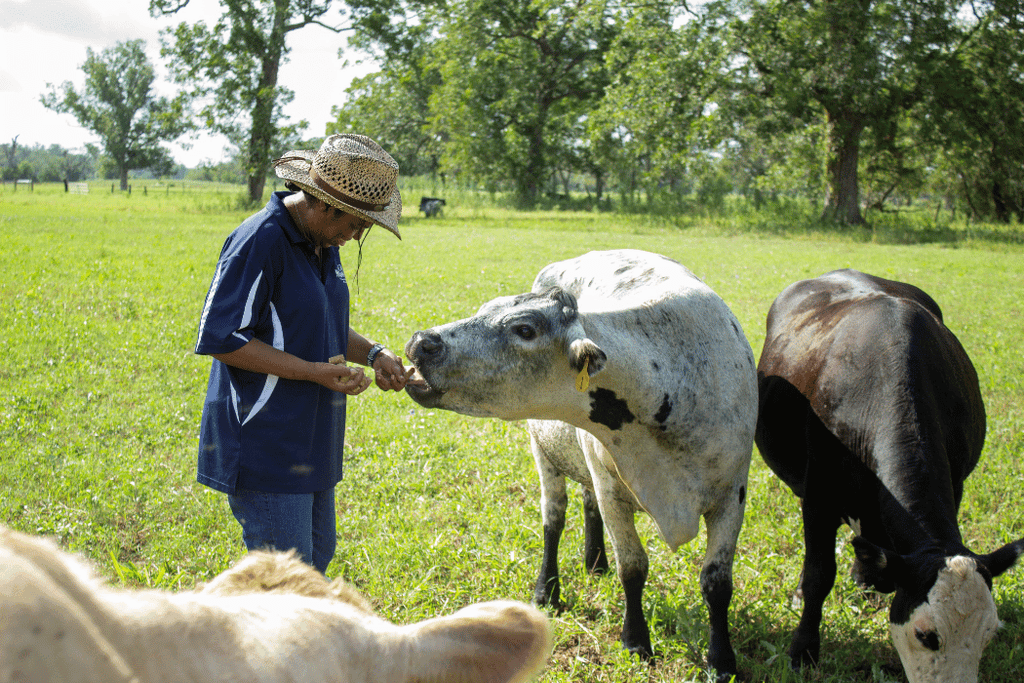
Last year, she built one. It is almost two acres, and it took six months. At first, it would not hold water. Neighbors drove by to look at the big hole in the ground and people in town asked what she planned to do with it. Harris hauled in loads of clay, drove the tractor back and forth, and brought in professionals. “By hook or by crook, this pond was going to hold some water,” she says. Thankfully, it does now. This past summer was hot, and her cows have been soaking in it. “I absolutely love it,” she says. Her lesson is simple. Sometimes, things are not done in a place simply because no one has done them yet.
Community Building Still Works, Even in the Woods
The ranch sits only an hour from Houston, but it feels far from the city. For years, her family kept to themselves. They went to church and then home. Now Harris is opening the gates. Older neighbors share stories about her family and tell her when nearby land is coming up for sale. She is hosting an event so the community can meet the new county agent. She also throws parties on the ranch, just as her father once did. Soon, about 50 people will come for a farmers-market-style bridal shower for a friend. She even has a garden now, something she never wanted before. “This is a new leaf for sure,” she says.
Women Ranchers Share Answers, Not Just Advice
Harris belongs to the American Farmland Trust Women for the Land Learning Circle in Texas. She has hosted two gatherings and attended two more. What she values most is the sharing. When one woman has a problem, another says, “Call this person, try this; that happened to me.”
“It’s much more of a sisterhood of sharing solutions and ideas,” she says.
At the sale barn, she knows she stands out. She is African American; she does not dress like the other ranchers, and she does not drive a big pickup—yet. Her career taught her to help people see what they have in common. The circle feels familiar to her. In the 1980s, she worked on offshore rigs, and almost all the time she was the only woman and the only African American there. Later, her industry worked hard to bring more women into oil and gas. She sees the same support among women in ranching. “We are a minority in this space,” she says, “and it doesn’t matter what color the women are.”
Saving Farmland Means Protecting the Food We Eat
Harris spent years building stewardship and sustainability programs for a global company. She says ranch life did not change her mind about those ideas; it made them real. In a big city, many things stay out of sight. On the ranch, she sees new buildings replace farmland. She sees fewer ranchers and smaller herds. She sees young people leave and never come back, because it is hard to make a profit.
“This is where we eat,” she says. If people do not support ranchers, and if there are no farm bills to help them, she warns, “we’re in trouble.” Land, people, and livestock must stay together, she says. When they fade, the whole country is in a dangerous place.
Ranching Is a Second Act, Not a First Career
What would she tell another woman or another entrepreneur of color who wants to buy land or cattle? Her answer is honest. “You can’t do it for the money, because the money isn’t there,” she says. People should ranch because they love it, believe in it, and want the long-term health that comes with an outdoor life. Weather and government rules are out of any rancher’s control. She calls ranching “a post-career decision, not a pre-career decision.” She does not tell young people to skip Wall Street, engineering, or the semiconductor industry.
Still, she is passing the ranch down. Over Thanksgiving, Harris and her daughter started a cattle company, and the first cow was her Christmas gift. A first bull is coming soon. Harris wants her daughter to have the ranch for life, and she wants her to have a big career, too. “You have to put your foot in both areas,” she says.
What Comes Next for the McCann Family Ranch
The family ranch in Egypt, Texas, purchased for $200 by a freed slave, today has a new pond, a growing herd, a county community learning its new neighbor, and a woman who is still taking classes. Harris is proof that a second act can be bigger than a first. And she is keeping land that her family waited more than 125 years to call its own, safe for the next generation.