
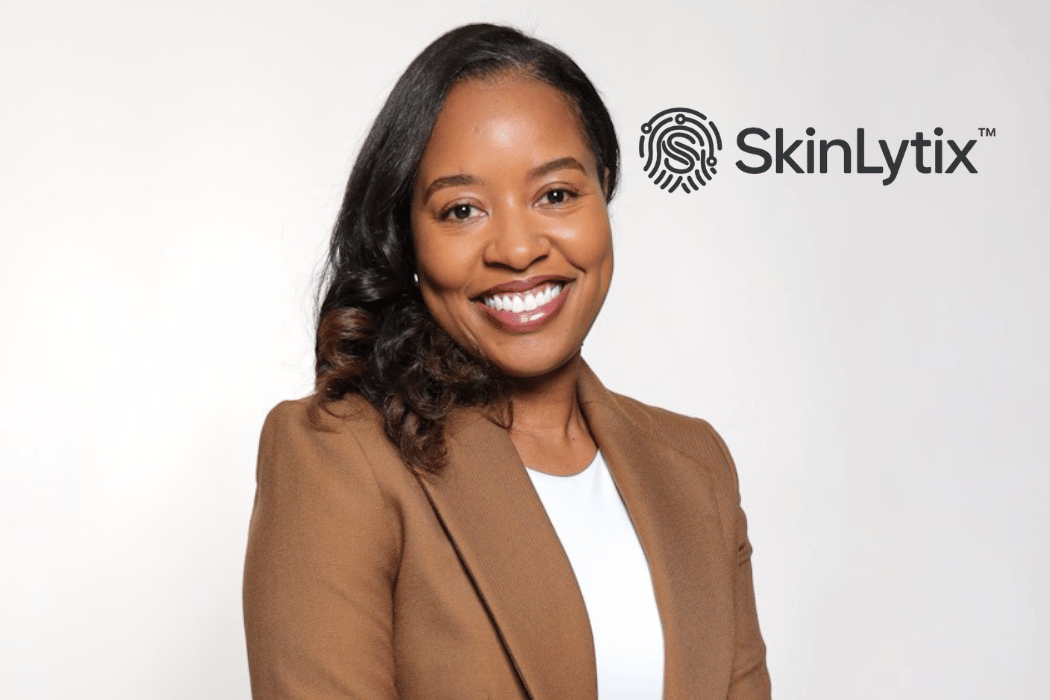
Alicia Dupass worked inside the labs and on the beauty floors. She saw exactly what the science was missing. Now she’s built a platform that gives melanin-rich consumers the ingredient truth that brands have long kept off the label.
Alicia Dupass knew something was wrong long before she had the platform to fix it.
She studied biology at Clark Atlanta University and while still in school, she landed a job as a lab technician at a cosmetic lab in Atlanta. It was there she first learned what goes into the products people put on their skin every day and who those products were really made for.
After college, she moved to New York and worked for a French beauty company. Her job took her inside beauty retail giants Sephora, Ulta, Nordstrom, and Von Maur. She talked to real customers, and she heard the same complaints again and again. Products that promised results but didn’t deliver them. Skin types that were never considered during the formula process. People spending hundreds of dollars trying to find something, anything, that worked for their skin.
“The brands are using marketing more than the science behind the product,” Dupass says. “SkinLytix brings cosmetic chemists and formulators out of the shadows and to the forefront.”
That experience led her to build SkinLytix, an Atlanta-based tech platform that uses artificial intelligence and peer-reviewed research to help people understand exactly what is in their skincare products and whether those products are right for their skin.
What the $600 Billion Beauty Industry Is Still Getting Wrong
The global beauty industry is worth more than $600 billion. But for decades, much of the ingredient testing and skin research behind those products has centered on lighter skin tones. Melanin-rich skin has largely been left out of the equation.
This is not a small gap. Melanin-rich skin has real differences in how it reacts to certain ingredients. It can be more prone to hyperpigmentation. It responds differently to sun exposure. It has unique needs that a one-size-fits-all formula cannot meet.
Even the Fitzpatrick scale, a long-used standard in skin science that measures how skin responds to the sun, covers a wide range of skin tones. But the beauty industry has not kept pace with that range when it comes to actual product development.
“The consumers purchasing many of these products are not the people the brands created them for,” Dupass says. “At SkinLytix, we want to be inclusive in how we deliver information. We include those nuances. We educate the consumer on what to look for.”
Inside the SkinLytix Platform
SkinLytix is a web app available at www.skinlytix.com. It is mobile-friendly and requires no download. A user creates a profile, then takes a picture of a skincare product. The platform scans the ingredient list and returns an EpiQ score on a 100-point scale.
The score tells the user how compatible that product is with their specific skin type based on what is actually in it, not what the brand says on the front of the label.
“Think of it like grade school,” Dupass says. “One hundred is an A. Zero is an F. I’m not taking you away from what you’re used to. I’m using something familiar to help you understand what you’re putting on your skin.”
The platform goes beyond surface-level ingredient scanning. Take hyaluronic acid, a common skincare ingredient. Most people have heard of it. But there are actually multiple forms of hyaluronic acid used in formulas, and they do not all work the same way. SkinLytix identifies which form is in a product and cross-checks it against peer-reviewed research to determine if it is a good fit for the user’s skin profile.
The Spelman College Partnership Changes Everything
What truly separates SkinLytix from other apps is the collaboration with Spelman College’s Cosmetic Science Program.
Cosmetic science students at Spelman are actively validating the data that the SkinLytix AI extracts from product labels. They check for accuracy, confirm ingredient types, and make sure the science behind the platform reflects real research. This is not a branding deal. It is a working partnership built on scientific rigor.
“It is good to have that human touch,” Dupass says. “Not all AI systems are built to understand the nuances that people with melanated skin may face.”
For Dupass, the Spelman alliance is also a statement. The beauty industry has long pushed chemists and formulators into the background. SkinLytix puts their expertise front and center and makes it the foundation of the product.
A Bridge Between You and Your Skincare Professional
SkinLytix is not designed to replace estheticians or dermatologists. It is designed to work alongside them.
Between appointments, consumers are on their own. They scroll TikTok. They see Instagram ads. They try products based on what is trending, not what their skin actually needs. A product that looks great on a video may contain an ingredient that causes inflammation or dryness in melanin-rich skin.
“SkinLytix steps into that gap,” Dupass says. “It allows that visibility so consumers can use the proper ingredients the first time.”
The platform also helps skincare professionals do their jobs better. Clients do not always tell their esthetician or dermatologist every product they have been using. With SkinLytix, the client’s product history is part of their profile. The professional can see what their client has actually been using and make recommendations based on real data, not guesswork.
What Comes Next for SkinLytix
In the short term, Dupass is focused on building out SkinLytix’s business-to-business channel. That means creating the data foundation needed to serve both everyday consumers and professional partners at scale.
The bigger goal is to make SkinLytix the most trusted intelligence platform in the beauty industry not just a tool that scans labels, but a translator that turns complex scientific language into clear, simple information anyone can use.
“We are answering the why,” Dupass says. “This product gives you healthy, glowing skin. Why? We want to put real definition behind what a product does.”
SkinLytix is available now at www.skinlytix.com. You can follow the brand on Instagram, Facebook, and TikTok at @SkinLytix.