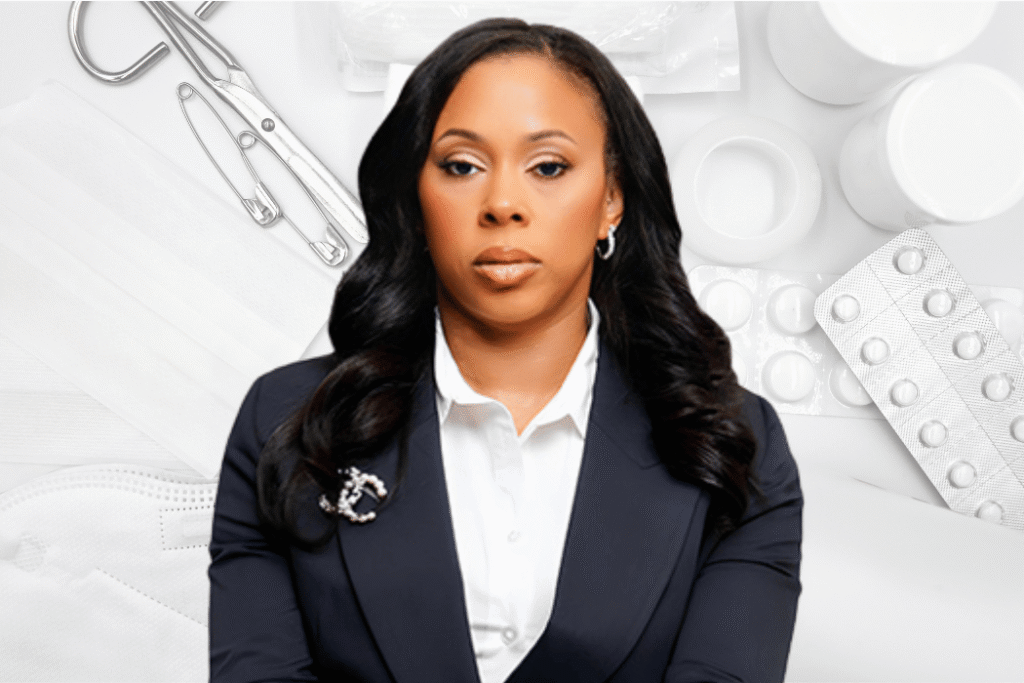

Diana Domenech, the new President & CEO of WBEC Metro NY and Greater DMV, says the moment has shifted; corporations now need women-owned businesses to survive, not just to check a box.
Something big is happening in the world of women-owned businesses. Across the country, women are launching new companies at a record pace, now accounting for nearly half of all new business creation in the United States. They are building firms that are resilient, creative, and deeply rooted in their communities. And increasingly, major corporations are waking up to the fact that many women entrepreneurs have always known: these businesses are not just good for social impact. They are good for business.
Diana Domenech is one of the people helping make that connection real. As the newly appointed President and CEO of WBEC Metro New York and Greater DMV, a Regional Partner Organization (RPO) of the Women’s Business Enterprise National Council (WBENC), she leads one of the nation’s most active women’s business certification bodies. WBENC is the gold standard for WBE certification and the leading national advocate for women entrepreneurs and the corporate leaders who partner with them.
In a recent conversation with MBE Magazine, Domenech shared her vision for the organization, her read on where supplier diversity is heading, and the hard truths about what it really takes for women-owned businesses to move from certification to long-term contract success.
The Quiet Power of Women-Owned Businesses
Domenech does not mince words when asked about the role women entrepreneurs are playing in today’s economy. “Women-owned businesses continue to prove themselves to be resilient, innovative, and collaborative problem solvers,” she says. “And this is exactly what we need right now.”
Corporate America is under pressure. Companies are rethinking their business models, the technologies they use, the markets they serve, and the people they employ. And they are not doing it alone, their supply chains are central to how they adapt. That is where women-owned businesses are stepping into a new kind of power.
“Their supply chain is an important part of how corporations navigate change,” Domenech explains. “And their external partners, including women-owned businesses, are a big part of that.”
The Gap Between Opportunity and Access
Launching a business is one thing. Scaling it into an enterprise-level supplier is another challenge entirely. Many women entrepreneurs successfully build their companies, only to hit an invisible ceiling when trying to compete for large corporate contracts. Domenech says the problem is not capability. It is access.
“Our women-owned businesses are incredibly qualified,” she says firmly. “It’s not about whether they lack the capability. It’s about lacking the access to those opportunities.”
A big part of WBEC Metro New York and Greater DMV’s mission is closing that gap, not just by providing WBE certification, but by getting women-owned businesses in the room with the decision-makers who control real contracts. Domenech wants those conversations to lead somewhere concrete. “We need to turn conversations into contracts, not just dialogue,” she says.
She also highlights an opportunity that often goes overlooked: WBE-to-WBE commerce. Not all women-owned businesses are small startups. Some are large companies with significant purchasing power. “There is a huge opportunity to sell to each other,” Domenech says, “and to collaborate on how to approach potential clients together.” She points to joint ventures, partnerships, and teaming arrangements as powerful tools that women entrepreneurs can use to compete at higher levels.
Supplier Diversity Has Changed. Here’s How.
For decades, supplier diversity programs were seen as a social responsibility effort, a way for corporations to support underrepresented communities. That framing is changing, and fast. Over the past 12 to 18 months, Domenech has watched supplier diversity shift from a “nice to have” into a core component of supply chain strategy.
“Supplier diversity sits within the supply chain or within procurement,” she explains. “And procurement is charged with reducing costs, driving innovation, maintaining critical business functions, and expanding into new markets. Supplier diversity aligns with all of that.”
Her message to women-owned businesses is direct: stop thinking of diversity as your selling point and start thinking like a strategic supplier. Ask yourself how you are the lowest-cost solution. How are you the most innovative partner? How do you help corporations protect risk or break into new markets? “When companies compete at that level,” Domenech says, “the fact that we’re diverse ends up being the added bonus.”
The shift, she says, is not about downplaying diversity. It is about telling the story better. “Diverse suppliers already do this. We just need to tell that story in a more impactful way.”
What Long-Term Contract Success Actually Requires
Getting in the door is hard. Staying there is harder. Domenech says many women-owned businesses underestimate what long-term contract success really demands, and it starts long before anyone signs anything.
“I’d almost liken it to dating,” she says with a laugh. “You date before you get married. You ask a lot of questions. You want to really get to know your partner before deciding to take that next step.”
That means doing the research. It means identifying multiple points of contact within a target organization, not just one champion, but several voices who can speak to different needs. And it means crafting a solution that reflects a deep understanding of where that client is today and where they are going.
“You must craft your solution in a way that truly adds value,” Domenech says. “This shows you understand the organization’s needs today and going forward. Doing so ensures you are not just a vendor for today, but a partner for the next 10 years.”
The Vision: More Than Certification
Domenech is only weeks into her role, but her direction is clear. WBEC Metro New York and Greater DMV wants to be more than a certification body. It wants to be a trusted partner for its more than 3,000 certified WBEs and nearly 80 corporate partners.
That means showing up for members in tangible ways, through events like the Women Mean Business Summits, Impact Awards, pitch competitions, and We Talks, as well as through educational programming that helps entrepreneurs navigate a complex and shifting economy.
“It’s not just about getting certified,” she says. “It’s about showing up and making those meaningful connections. We are stronger when we are together.”
She is also focused on deepening partnerships with other organizations to extend the reach and impact of WBEC Metro New York and Greater DMV’s network. The organization does not go at it alone, and neither should its members.
The Multiplier Effect: Why Growth Matters for Everyone
Look five years ahead, and Domenech sees something bigger than individual contracts. She sees a multiplier effect, one where supporting the growth of women-owned businesses creates ripples across the entire economy.
“Winning just a contract is not enough,” she says. “It’s thinking about intentional growth and supporting companies in scaling.” When a women-owned business grows large enough to compete for bigger contracts, it does not just win for itself. It often brings other women-owned businesses along, using them as vendors in its own supply chain, partnering with them to serve clients, and paving a wider road for the next wave of founders.
For corporations, Domenech says, this is a strategic opportunity that should not be missed. “As corporations look to the future, they need to think about how engaging with women-owned businesses creates a multiplier effect,” she says. “That is what is going to continue to strengthen us and evolve us over the next few years.”
The story of women-owned businesses in America is no longer a story of struggle against the odds. It is a story of strategic power, one that Diana Domenech and WBEC Metro New York and Greater DMV are working every day to amplify, connect, and scale.
About WBEC Metro NY and Greater DMV
WBEC Metro New York and Greater DMV is a Regional Partner Organization (RPO) of the Women’s Business Enterprise National Council (WBENC), the nation’s gold standard in WBE certification and the leading advocate for women-owned businesses, entrepreneurs, and corporate leaders. Under President & CEO Diana Domenech, the organization serves more than 3,000 certified WBEs and nearly 80 corporate partners across New York and the greater Washington, D.C. metro area.