When funding disappears and classrooms crumble, children learn their first devastating lesson: the world doesn’t care about them. One educator is fighting back.
Imagine being seven years old and raising your hand in class, proud of acing a math test. Then a classmate turns to you and says, “You think you smart? You’re gonna mess it up for all of us.”
That moment changed Reginald “Cool Mill” Shareef’s life. Growing up in Homewood, one of Pittsburgh’s toughest neighborhoods, he watched 30 to 40 friends die before he turned 18. He saw drug deals at age six. He witnessed police brutality. His first friend died at 12 years old.
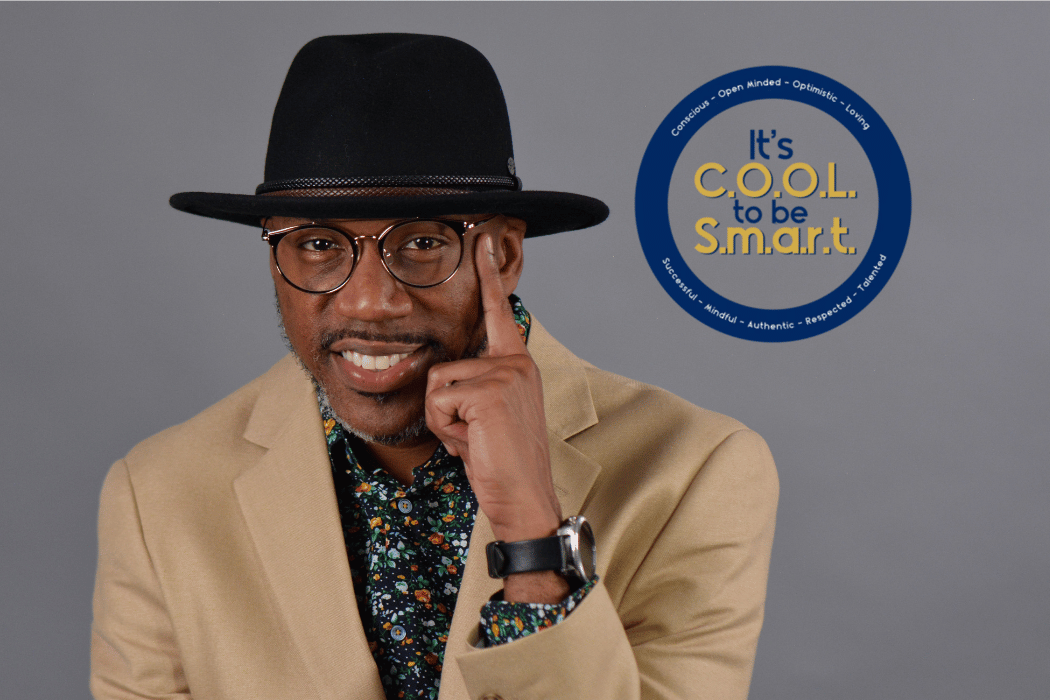
But Shareef made a different choice. Today, he runs “It’s C.O.O.L To Be S.M.A.R.T,” an Atlanta-based program transforming the early childhood education impact on thousands of students across America. His mission: prove that being smart isn’t something to hide; it’s something to celebrate.
When Early Childhood Education Systems Fail, Children Pay the Price
Right now, Head Start serves 675,750 children on a $12.3 billion federal budget. But funding cuts threaten thousands of seats. When early childhood education programs become unstable, something terrible happens.
“Instability becomes that child’s first lesson,” Shareef explains. “They begin to understand really early what it’s like to be not thought about, not cared for, to not have pencils or paper or the different things they need.”
Children thrive on predictable outcomes. Pass this test, move to second grade. Complete this exercise, get a good grade. But when seats disappear and funding freezes, families feel the stress. And children absorb it.
The early childhood education impact goes deeper than literacy rates. It shapes trust, confidence, and emotional development. When the system fails, it doesn’t just disrupt classrooms. It disrupts children’s belief in themselves.
Building Student Confidence in Underserved Communities
Shareef understands what happens when schools can’t meet children’s needs. He lived it. His elementary school in Homewood was rough. Kids cheated off him. Others threatened to fight him for using his brain.
“I could have let it impact me,” Shareef recalls. “But I was lucky. I had an amazing family. We just happened to live in a hood, but they enforced the important principles within me. They kept me engaged in the community, kept me in sports and intellectual activities. That saved me.”
That experience taught him something crucial about building student confidence: it can’t happen in isolation. Confidence requires external affirmation. It needs to be reinforced by the community, the classroom, and the voices around a child.
“Your environment speaks before the teachers do,” Shareef says. “If it’s toxic, you’re going to be toxic. If there’s a lack of nutrition, you’re going to feel that impact. The communities communicate whether it’s scarcity or possibility.”
STEAM Education Programs That Actually Work
Most people know STEM: science, technology, engineering, and math. Shareef expanded it to STEAM—and the difference is revolutionary.
His STEAM education programs add three critical elements:
Entrepreneurship teaches students about business, money management, and financial literacy. In underserved communities, these skills are often ignored. But they’re essential for breaking cycles of poverty.
Arts and Music bring back programs that many schools cut. African American children are often naturally entrepreneurial and connected to art and music. Removing these subjects removes their connection to learning.
Mental Health and Wellness address the trauma, stress, and environmental factors that impact student mental health and learning. Where grocery stores are located, what families eat, neighborhood violence, all of it affects how children learn.
“We realized that African American children lack developmental understanding in fundamental principles like money,” Shareef explains. “And in our communities, there’s a significant impact on mental health and wellness. We had to address all of it.”
Youth Empowerment Through Education: From Invisible to Invincible
One of Shareef’s most powerful workshops teaches students to go “from invisible to invincible.” The concept came from his corporate experience.
As a young Black professional in Seattle, Shareef often found himself the only person of color in the room. People looked through him. Someone once asked him to get coffee, when he was the leading authority in the meeting.
“They don’t just look at you, but they look through you,” he says. “I’ve been looked through before. Nobody’s caring about you. Nobody’s thinking about you. Nobody’s paying attention to you.”
Instead of letting those experiences crush him, Shareef learned to flip them. Youth empowerment through education means teaching kids to turn their perceived weaknesses into superpowers. The things people overlook become the things that make them unstoppable.
Educational Reform Initiatives That Make Learning Fun
Here’s the problem with most assemblies: a speaker shows up, gives an inspiring talk, then leaves. Students go back to their regular world. The motivation fades.
Shareef’s educational reform initiatives work differently. He calls it “edutainment”—education plus entertainment. His programs don’t just inspire briefly. They build internal frameworks that stick.
In South Bend, Indiana, the city brought Shareef in for a whole day with 150 to 200 high school students. They screened his documentary, “It’s Cool To Be Smart.” Then they held workshops on making better choices, discovering superpowers, and learning about HBCUs (historically Black colleges and universities).
But here’s the twist: they also brought in a DJ. Students danced, sang, and jumped around. They didn’t even realize they were doing wellness exercises, getting their blood flowing, and learning about their bodies.
At McAdory Middle School in McCalla, Alabama, Shareef created a pep rally focused on test-taking skills. Instead of parents handing out candy bars, the whole school had races, competitions between students and teachers, and learned actual strategies for taking standardized tests.
“We do programming that’s never been done before,” Shareef says. “It’s educational and entertaining. That’s where our bread and butter lies.”
When Children Internalize Failure Before Age Seven
Research shows that by age seven or eight, a child’s personality is formed. Who they are and who they will become is already developing.
Children don’t wait for middle school or high school to form their identity. They start absorbing messages about intelligence, capability, belonging, and leadership in elementary school, or earlier.
“Imagine if I had listened to that kid who said I was going to mess it up for everybody by being smart,” Shareef reflects. “Imagine where I would be. I’d probably be where that kid is today, still in my neighborhood, still bullying people for being smart.”
This is why the early childhood education impact matters so much. The messages children receive at seven years old stick with them for life.
The Crisis in Underserved Communities Education
Budget cuts threaten programs designed to help students. Communities feel powerless to protect their young learners. What’s the answer?
Shareef believes the issue isn’t just about funding. It’s about fundamentally changing how we think about learning.
“We can learn in any environment,” he says. “It’s really the feeling, the inspiration, the belief, the motivation that learning is cool, that learning is fun, that learning is as important or more important than shooting a basketball.”
The problem? Classrooms in underserved communities often look like prisons. They’re morbid and drab. And the education system hasn’t evolved with technology.
“Technology has impacted every single thing we do every single day,” Shareef points out. “But we’re literally learning the same way, learning the same things. It’s ineffective.”
Student Mental Health and Learning Are Connected
One of Shareef’s most important insights connects student mental health and learning in ways schools often miss.
When children grow up seeing violence, experiencing poverty, and living with food insecurity, their brains can’t focus on algebra or grammar. Their mental health needs come first.
“Your environment breeds who you are,” Shareef explains. “You’re in class for certain hours a day, but when you leave that classroom, and you’re in an environment that’s toxic, you’re going to be toxic.”
This is why his STEAM education programs include wellness workshops. Students learn about mindset and confidence. They discover their superpowers. They practice moving their bodies and managing stress.
The connection between student mental health and learning isn’t optional—it’s essential.
What Real Educational Reform Initiatives Look Like
Shareef doesn’t just criticize the current system. He offers concrete solutions through his work with K-12 schools, colleges, and corporations.
His programs focus on group learning instead of isolation. In the real world, people learn from colleagues and team collaboration. But schools still put students in isolation, make them answer questions alone, then wonder why they can’t work effectively with others.
“When you get a job, you learn from the people around you,” Shareef notes. “You learn from group think. But we put students in isolation, make them answer questions by themselves, then they get into the real world and don’t even know how to work with people effectively.”
He also points out that college curricula are outdated. By the time students take a class, the content is already irrelevant. It takes four to five years to create a new course, two to three years at minimum.
“Colleges are still teaching through ‘read this book, write a paper, take a test,'” Shareef says. “People don’t learn just that way anymore.”
Building Student Confidence That Lasts a Lifetime
At its core, “It’s C.O.O.L To Be S.M.A.R.T” does one thing brilliantly: it makes building student confidence a community effort.
Shareef brings principals, teachers, parents, and students together. He screens his documentary. He leads workshops. He brings in DJs and creates pep rallies. He teaches about HBCUs, financial literacy, and mental wellness.
But most importantly, he creates environments where students feel seen.
“Our environments are completely safe,” he says. “We’re absolutely real with these students. They can be themselves. They can say what they want to say. And they enjoy it.”
When students feel safe, seen, and celebrated for using their brains, something magical happens. They start believing in themselves.
The Future of Youth Empowerment Through Education
Shareef envisions a world where every child grows up believing that intelligence is cool. Where being smart isn’t something to hide or apologize for. Where communities celebrate academic achievement as much as athletic success.
“Before seven years old, if we could inspire and encourage our children to want to learn, to want to read, and to do it in ways that are fun and engaging, we wouldn’t have an issue,” he says. “Our classrooms would be filled with people who want to be in them.”
His hope? That the movement goes viral. That the world starts talking about why it’s important to be smart and knowledgeable. That people wake up and demand more programs focused on youth empowerment through education.
“We need more programming like that,” Shareef says. “We need more content like that. And I think that’s what it’s going to take, something radical. A radical shift in the way that we think.”
The Early Childhood Education Impact We Can’t Ignore
Reginald Shareef’s story proves something powerful: the early childhood education impact we create today determines the adults that children become tomorrow.
When we invest in stable, engaging, emotionally supportive education systems, we give children the foundation they need to thrive. When we cut funding, create unstable environments, and ignore mental health, we teach children that the world doesn’t care about them.
That seven-year-old kid who raised his hand proudly in class? He could have listened to the bully. He could have stopped trying. He could have decided that being smart wasn’t worth the trouble.
Instead, Reginald Shareef chose to believe that intelligence matters. That confidence can be built. That underserved communities deserve world-class education. And that every child has the right to be seen, celebrated, and empowered.
Now he’s on a mission to make sure no other child has to choose between being smart and being accepted.
Because when it’s cool to be smart, everyone wins.
Watch the full “It’s Cool To Be Smart” documentary here.