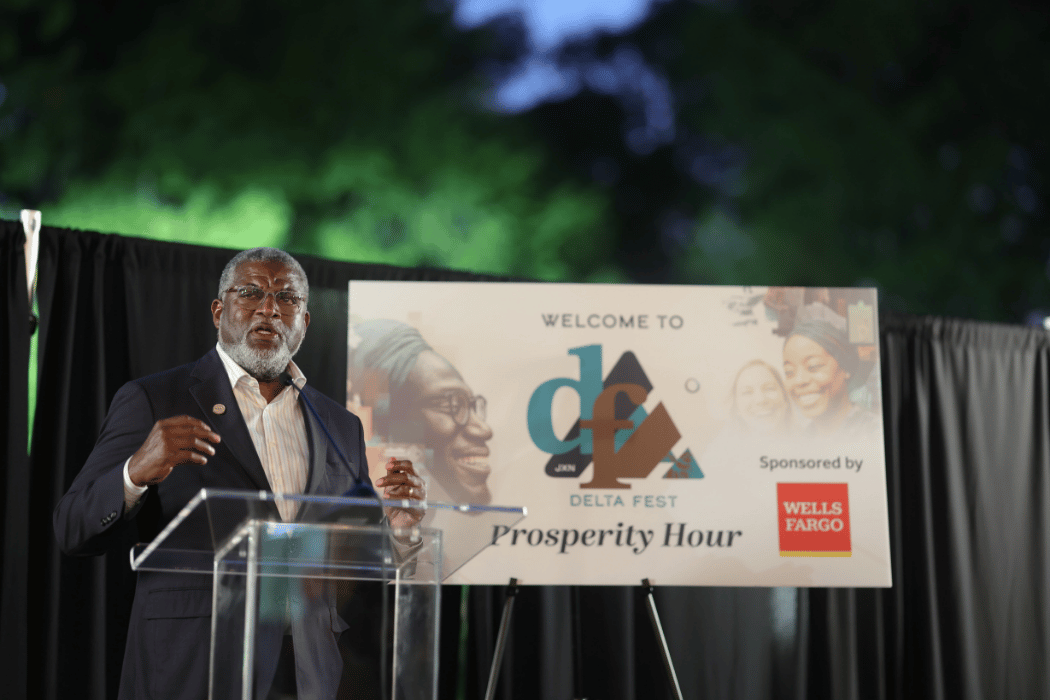
Nearly $300 billion is flowing into Deep South states. Bill Bynum wants to make sure diverse business owners get a real seat at that table.
Money is moving into the Deep South faster than most people realize. Factories, ports, data centers, and hospitals are going up across Alabama, Arkansas, Georgia, Louisiana, Mississippi, and Tennessee. Lisa Yancey and her team have already tracked almost $300 billion in committed investment across the region, counting only projects worth a billion dollars or more.
That number should be good news for everyone in the region. But William “Bill” Bynum, founding CEO of HOPE (Hope Enterprise Corporation, Hope Credit Union, and Hope Policy Institute), has seen this pattern before. When big money moves fast, the people who need it most often get left out.
“Unless there is intentional effort to make sure that there’s broad participation in these investments, then the majority of people, and certainly people of color, are not going to be as well represented in the benefits of those investments,” Bynum says.
That warning is the reason Delta Fest exists.
A Festival Built Out of Hard Lessons
HOPE has worked in the Deep South for more than 30 years. Bynum says the organization kept seeing the same story play out during Hurricane Katrina, the 2008 financial crisis, COVID-19, and the unrest after George Floyd’s murder. Every time a crisis hit, the people who were already struggling, many of them people of color, had the hardest time getting help.
After the last presidential election, Bynum and his team sensed another shift coming out of Washington. He called Darren Walker, the former president of the Ford Foundation, to talk through how to protect the progress the region had made. Walker connected him with Lisa Yancey of Yancey Consulting, and together they built something bigger than the economic forums HOPE had hosted in the past, events that once brought Federal Reserve Chair Jerome Powell and then-Vice President Kamala Harris to Mississippi.
“It evolved from a summit, a forum, to an economic mobility activation, a South by Southwest for prosperity, if you will,” Bynum says.
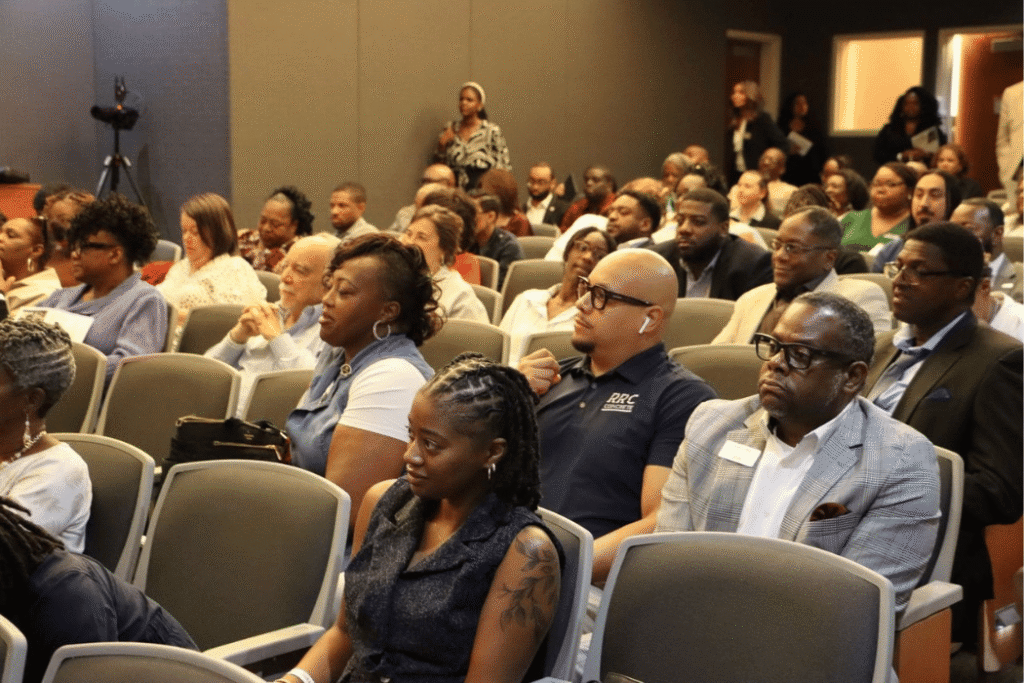
Delta Fest launched last year with a target of 250 attendees. More than 500 people showed up in Jackson, Mississippi, in person, and 3,200 more watched online from 20 countries. The demand was clear. People across the Deep South wanted a place to build real partnerships, not just attend another panel discussion.
Three Pillars, One Goal
Delta Fest organizes its work around three pillars: entrepreneurship, ownership, and community infrastructure. That last pillar covers the institutions every healthy community depends on: health care, education, grocery stores, and nonprofits.
The strategy behind the pillars is not about race alone, Bynum says, but about closing gaps wherever they exist.
“If we’re going to have an effect where the need is greatest, it’s got to prioritize people of color,” he says. “That’s been Hope’s history.”
The numbers back that up. HOPE is the largest Black- and woman-owned financial institution in the country, and the majority of its credit union members are women and people of color. Bynum also pointed out that the six states Delta Fest serves are home to 45 percent of the nation’s historically Black colleges and universities (HBCUs), giving the region a workforce pipeline few other places can match.
What $300 Billion Actually Means for Small Business Owners
For diverse business owners wondering where they fit into a number as large as $300 billion, Bynum’s answer was direct: almost everywhere.
He pointed to one construction company building data centers across the region that set aside $100 million, spread across four projects, just for air conditioning, portable restrooms, and food trucks to keep workers on site and on schedule. That is one slice of one project. Multiply it across manufacturing, logistics, healthcare, and energy investments happening at the same time, and the opportunities stretch far beyond construction.
“From just things you wouldn’t even imagine, beyond the construction, the moving dirt, the technical, the electrical, the engineering, the legal, the technology, everything that a business needs is an opportunity,” Bynum says.
He believes the region’s demographics make it uniquely positioned to capture that opportunity, pointing to the concentration of HBCUs producing skilled graduates and entrepreneurs ready to step into supply chains that are actively looking for new vendors.
Three Days in Jackson
This year’s Delta Fest runs September 2 through 4 in Jackson, Mississippi. The lineup includes leadership from Entergy, the region’s largest electric utility, along with executives from Ingalls Shipbuilding and Nissan’s U.S. supply chain team. Raphael Bostic, former president of the Federal Reserve Bank of Atlanta, will share insight on the region’s economic outlook. Four HBCU presidents will speak about their dual role as workforce developers and major property owners in their communities.
Sessions will dig into joint ventures, entrepreneurship through acquisition, and how small businesses can build the capacity to compete for large contracts. Other conversations will tackle the rise of data centers and how communities can benefit from that growth instead of absorbing its costs alone.
The timing is intentional. Delta Fest wraps up right before Jackson State University’s home football opener, paired this year with the second annual Hope Labor Day Classic.
“We know how important sports are across the South, and HBCUs are a unique experience,” Bynum says.
Attendees who cannot travel to Jackson will still have access. Most main stage sessions and many breakouts will stream live, though a set of invitation-only afternoon conversations will remain in-person only, reserved for the kind of candid, relationship-building talks Bynum says often matter more than the sessions themselves.
A Ten-Year Commitment, Not a One-Time Event
Bynum is careful not to oversell what one festival can accomplish. When HOPE launched Delta Fest, the team committed to a 10-year timeline for building an economic ecosystem where everyday people across the Deep South can prosper.
“It took four hundred years for us to get here. It’s not going to be done quickly,” Bynum says. “Ten years is an audacious goal, but we felt it was important to set a goal, a timetable, and that’s what we’re driving toward.”
He is not looking to expand Delta Fest beyond the Deep South anytime soon. Instead, he sees the region as a preview of where the rest of the country is headed, shaped by rapid population growth and shifting demographics that mirror national trends.
“I think that we are in many ways the belly of the beast for where this country is going,” Bynum says. “When we get it right here, when we show that economic opportunity broadly made available is possible, I think it is a tremendous lesson for the rest of the country.”
For diverse business owners, Delta Fest is not just a conference to watch from a distance. It is a direct entry point into a $300 billion investment wave that is already reshaping six states. Capital matters, but Bynum was clear that relationships matter just as much.
“If you’ve got access to the people who are making decisions, if you have access to the people who know the strategies, who can open capital flows, then we put ourselves in a much better position to succeed,” he said.
That is the ecosystem HOPE and Yancey Consulting are building in Jackson this September, one conversation, one contract, and one connection at a time.
To attend Delta Fest, you can purchase tickets here.