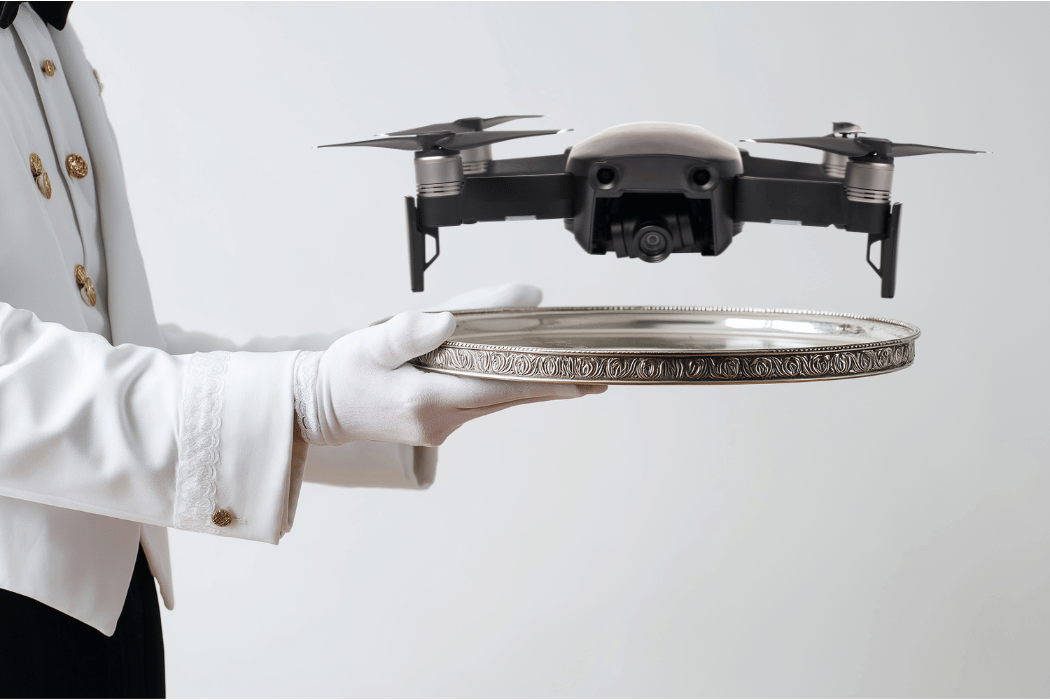
Drone-as-a-Service is much more than just new drone tech. It is industrial automation shifting from equipment ownership to outcomes delivered as a service. Beyond changing how companies fly drones, it’s changing how they think about inspections and operations work that used to be expensive and reliant on specialized teams.
How Drone as a Service brings the recurring-revenue SaaS model to industrial automation
For years, software companies have demonstrated that buying a program in a box wasn’t as valuable as subscribing to continuous improvement. Recurring revenue fuels faster iteration and better support, and companies get products that stay current.
Drone as a Service brings that same logic into the physical world. Instead of selling a drone as a one-time capital expense, providers sell an ongoing capability.
Operators like Drone as a Service offer routine services such as drone-based mapping or asset monitoring. These aerial platforms can perform tasks repeatedly and meet service-level expectations every time. Their contract services become an always-on extension of operations.
This repetition is ideal for industrial work, which is rarely a single event. Typically, you don’t inspect a pipeline just once. You may need to inspect it monthly or every time an anomaly appears. You don’t map a construction site once. You do it weekly and sometimes even daily. The recurring nature of the work fits perfectly with a subscription model that includes continuous upgrades and regular reports.
Businesses are choosing on-demand drone capabilities over in-house drone programs
I’ve met plenty of teams that bought drones only to discover the hidden cost of ownership. Purchasing the drone itself is the easiest part. The hard part comes with pilot training, safety programs, insurance, regulatory compliance, maintenance cycles, battery health, firmware updates, flight logging, data storage, and the pressure to keep the program running even when the one drone expert at the company leaves.
A drone program can become fragile if it depends on a few individuals and a collection of devices that age quickly. As sensors and autonomy improve, and regulations and best practices change, drones capacities age quickly. A purchase locks you into the moment you buy your equipment.
Drone as a Service offers much more flexibility. Instead of asking, “Which drone should we buy?” businesses ask, “What insights do we need, and how often and how fast do we need them?” They pay for deliverables like volumetric measurements or crack detection reports without the burden of running an aviation program. For many organizations, that’s a massive relief.
How autonomous and AI-powered drones can reduce costs and address labor-intensive industrial tasks
What makes Drone as a Service more than just outsourcing drone flights is autonomy. Autonomy is the bridge between occasional drone use and truly automated industrial workflows.
When drones can fly repeatable routes and return to charge with minimal human intervention, you start to eliminate the most expensive parts of the process, such as travel time and manual data capture.
A manual inspection might require a shutdown and an entire crew. It could need safety spotters or specialized access equipment. A drone can perform that lengthy inspection in minutes and reduce the risk of injury.
These cost savings do not come at the expense of quality in the work either. Each drone flight creates a digital record that anyone can use to audit or compare over time. Because autonomous flights can be repeated under the same parameters, they return highly consistent information.
Autonomous flights also ease labor issues. Skilled technicians and field teams at industrial companies are stretched thin and shouldn’t be wasting their time driving to sites or documenting the information they retrieve. Automated drone inspections and surveys give experts better visibility so they can spend their time diagnosing and fixing issues.
The growing role of autonomous drone technology in inspections and other commercial applications
Drone as a Service is best suited for high-frequency and geographically distributed work. For example, inspections in the energy or utilities sector use drones to monitor infrastructure such as towers and substations with a speed and repeatability that ground crews can’t match.
Drones enable rapid topographic updates and consistent progress documentation in construction and earthworks mapping. That near-real-time visibility changes how teams allocate their equipment and manage their timelines.
Multispectral imaging in precision agriculture can help reveal plant health and irrigation effectiveness in ways that are hard to see at ground level. Drone as a Service makes these capabilities accessible without forcing growers to become data scientists and maintenance technicians all at once.
Autonomous patrol flights in security and emergency response become invaluable when time is critical and access is limited. A drone can provide immediate situational awareness and safer decision-making. It can offer an indisputable record of what happened and when.
Across all these use cases, the real product isn’t drone flight. It’s the interaction between regular collections of information and the operational decisions that follow.
Why Drone as a Service could become an important part of the future of industrial automation and enterprise technology
As autonomy matures, drones will be able to integrate with enterprise systems the way software bots did. They’ll be triggered by work orders, connected to asset management platforms, and generating alerts directly into maintenance queues.
We’re hoping the Drone as a Service model can play a role in making this happen. A service approach keeps companies current without constant capital requests and removes obstacles for industries that desperately need automation.
When I picture the next era of industrial automation, my mind doesn’t leap to robotics on factory floors. I first envision autonomy across sites and through workflows that used to depend on clipboards and long drives. Drone as a Service is one of the clearest paths to get there because it turns a complex technology into something businesses of all sizes can utilize today. The technology becomes a reliable capability that is delivered on demand and is always getting better.