
When lawmakers closed the state’s HUB Office, more than 6,400 certified firms lost their status overnight. Now hundreds of owners and The Collective are asking state leaders for a new executive order to bring back small business goals on state contracts.
The email was short, and it gave no reason. About a week after the state closed its HUB Office, a construction management company told a contractor it was dropping him from a City of Raleigh contract he had been working on as a subcontractor.
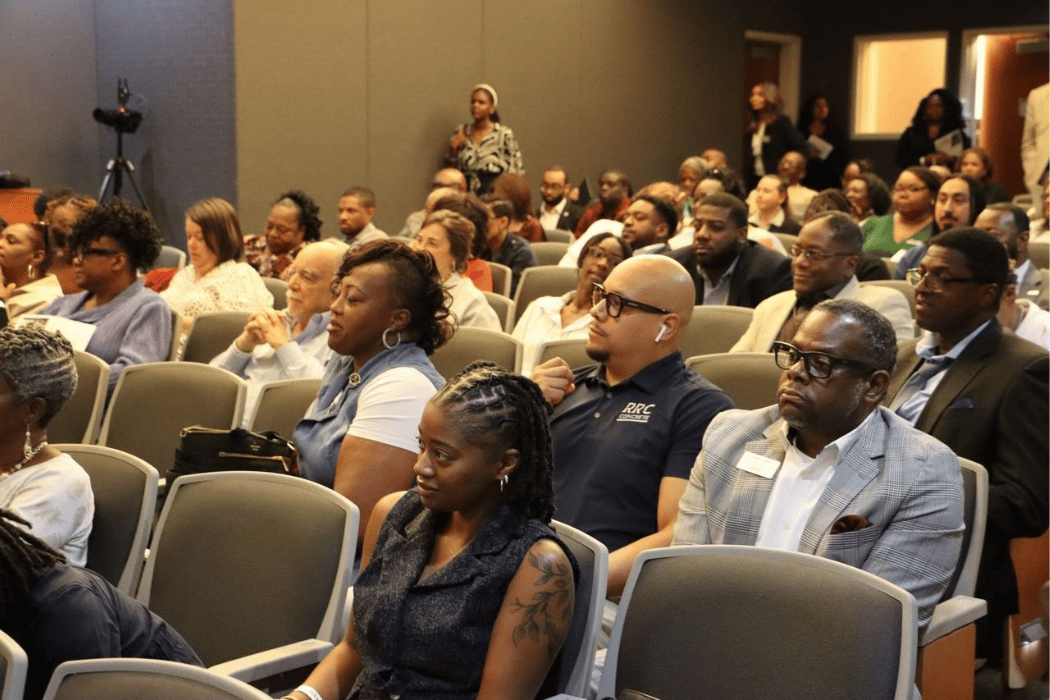
The contractor told that story out loud on September 10 at a Town Hall in Greensboro, where hundreds of business owners gathered to ask what happens now. Many of them had been certified through the state’s Historically Underutilized Businesses (HUB) Office, and they had watched that certification disappear almost overnight.
The event was led by The Collective, a coalition of business owners, chamber leaders, and advocacy groups from across the state. Its members include the Greensboro Business League, the Greater Durham Black Chamber of Commerce, the NC Black Alliance, the Urban League Affiliates of North Carolina, and the NAACP of North Carolina State Conference. Together, they are asking elected officials to support a new executive order that would set small business contracting goals for state work.
Why the HUB Office Mattered
To understand what was lost, it helps to go back to 1999, when Bridget Wall-Lennon moved to Raleigh to set up the HUB Office as its founding director. She says the office grew out of the efforts of three leaders who pushed then-Governor Jim Hunt to act: Katie Dorsett, the first Black woman to serve in a North Carolina cabinet, Carolyn Coleman, who worked in the governor’s office, and Dr. Andrea Harris of the North Carolina Institute for Minority Economic Development.
Their push led to Executive Order 150, which raised the state’s goal for spending with historically underutilized businesses from 4 percent to 8 percent and later to 10 percent. The order reached state agencies, community colleges, public schools, and universities, and the governor also moved the HUB unit into the secretary’s office so it would have more visibility. Wall-Lennon says that move gave the office a stronger voice, because its director could speak as an equal to other department leaders instead of having to tell her own supervisor that something was going wrong.
The office did much more than keep a list of businesses. Under Wall-Lennon’s leadership, it created one statewide certification, which ended the old process of filling out a separate application in every city, such as Greensboro, Durham, and Charlotte. It also helped write rules that required large builders to prove they had made a real effort to hire small and diverse firms.
Small Firms That Grew Into Big Ones
Wall-Lennon says she watched businesses grow because of these policies, especially in construction. When the state pushed large builders to partner with smaller minority-owned firms, those smaller companies gained the skills and size they needed to compete on their own. She points to Holt Brothers Construction, which started as a small contractor and can now lead large projects, and to Metcon, a Lumbee-owned company from Pembroke that she says is now one of the largest minority-owned general contractors in North Carolina. D.A. Everett, she adds, is another firm that grew through these partnerships.
State leaders have reported that more than $10 billion was spent with HUB firms over roughly 25 years, though Wall-Lennon says she does not know how that compares to the state’s total spending. She also notes that Black-owned firms often received less than others, and that goods and services were the weakest area, since state buying offices never adopted the same strong rules that construction had.
A Sudden Loss for Thousands of Businesses
Then the office closed, and Wall-Lennon says the day after the law passed, firms were told they were no longer certified. “It was pandemonium,” she says, describing how architects and builders began calling HUB firms to say they no longer had to use them, and how some firms were dropped from contracts that had not even gone out for bid yet.
Cyril “C.J.” Broderick Jr., president and CEO of the Greater Durham Black Chamber of Commerce, says the damage is already clear. “Folks are losing contracts left and right,” he says, explaining that some panelists at the Town Hall have lost hundreds of thousands of dollars. About 30 owners shared stories through a link The Collective created, and Broderick believes this is only the beginning, since some cities are now ending their own programs as well.
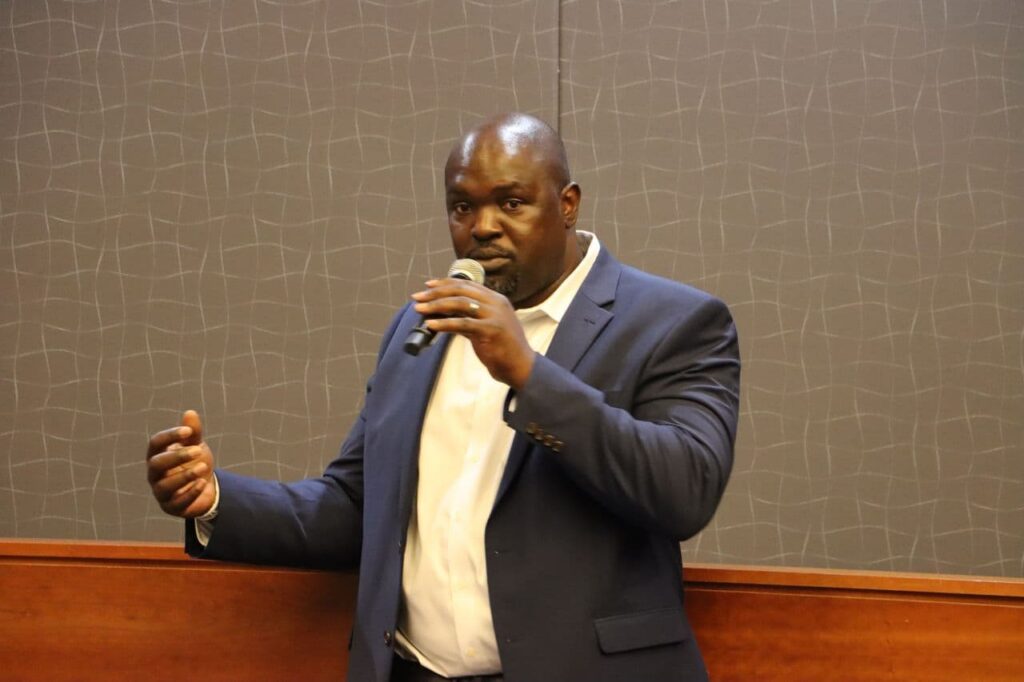
Photo: Valerie Fields
He also reminds people that the state of North Carolina is the biggest spender in the state, buying goods, services, and construction on a huge scale. Without an advocate in the state’s offices “looking over their shoulder,” he says, small businesses will suffer.
More Than a Program
Both leaders push back on the idea that the HUB Office was a DEI program. Wall-Lennon says it was about economic opportunity for businesses that had long been shut out of state contracts, and she points out that some non-minority firms were HUB certified as well.
Broderick says the fight is an old one, because Black business owners have asked for fair chances for decades while the help keeps changing names, from a federal minority business office in the 1960s to the HUB Office in North Carolina. He adds that these programs were backed by studies showing that small and diverse firms were being left out.
He also misses the numbers that came with the program. North Carolina had a 10 percent goal for many years, and the tracking showed how Black, Hispanic, Asian American, and women-owned firms were really doing. Without that data, he says, “it’s hard to tell a story,” and leaders may miss the warning signs they need to protect and grow these communities.
What The Collective Is Asking For
The Collective is making three main requests. The first is a new executive order that sets small business contracting goals of 25 percent, which Broderick says would give cities and towns a clear guide to follow, since without one it becomes much harder to bring more businesses into the work.
The second is for the governor to create an advisory council on Black affairs. Broderick says the governor already has the power to do this, and he points out that North Carolina has had an advisory council on Latino affairs for years. If the governor’s office can empower that community to fight for what it needs, he argues, Black business owners should be able to expect the same.
He shares a story about why this matters so much to him. Years ago, he and other Black business leaders were invited to a Raleigh event they understood to be about Black-owned business, and the crowd was about 60 percent to 70 percent Black. When the screen lit up with the hosts, which included the state’s Latino advisory council, the topic turned out to be Hispanic businesses. He wrote several letters to the governor’s office asking why there was no Black council, and he says he never received the answer he deserved.
The third request is aimed at business owners themselves, who Broderick encourages to join their local chambers and business groups. “We have our own power,” he says, and owners can start using it right now.
The Worry About the New SBE Program
The state says a new Small Business Enterprise program will carry on under the Division of Purchase and Contract, and that it will not use race or gender to decide who qualifies. Wall-Lennon says she does not yet know how it will work, but she hopes it will reserve some contracts for small firms only, since a company with $3 million in sales should not have to compete with one that has $30 million.
She still has concerns. She says Black-owned firms often have a harder time getting loans and bonds, and she has heard that the federal Small Business Administration may raise its size limits, which could mean that many so-called small businesses would in fact be very large ones. Broderick adds that some people believe the state should simply pick the lowest bid, yet the state has long looked for the lowest qualified bid, and hidden hurdles such as huge bundled contracts and high bonding rules can shut small firms out before they ever get started.
Looking Five Years Ahead
Despite the setbacks, both leaders still see a path forward. Wall-Lennon would love to see the HUB Office return “with more teeth,” though she knows that may be difficult in the current climate, and she hopes that HUB firms can still compete and keep their businesses strong under the new rules.
Broderick’s vision is bolder. In five years, he pictures a new legislature and a stronger office he calls “HUB 2.0,” where owners are no longer afraid to ask for goals and no longer accept a 10 percent target that turns into 1.7 percent in real spending. “We’re bold enough to ask for what we want and to get it,” he says.
The Town Hall was only one step, since The Collective says it has worked behind the scenes for two months and is now bringing that work into the open. For the owners who left Greensboro that day, the message was clear: the HUB Office may be gone, but the fight for a fair share of state contracts is just getting louder.