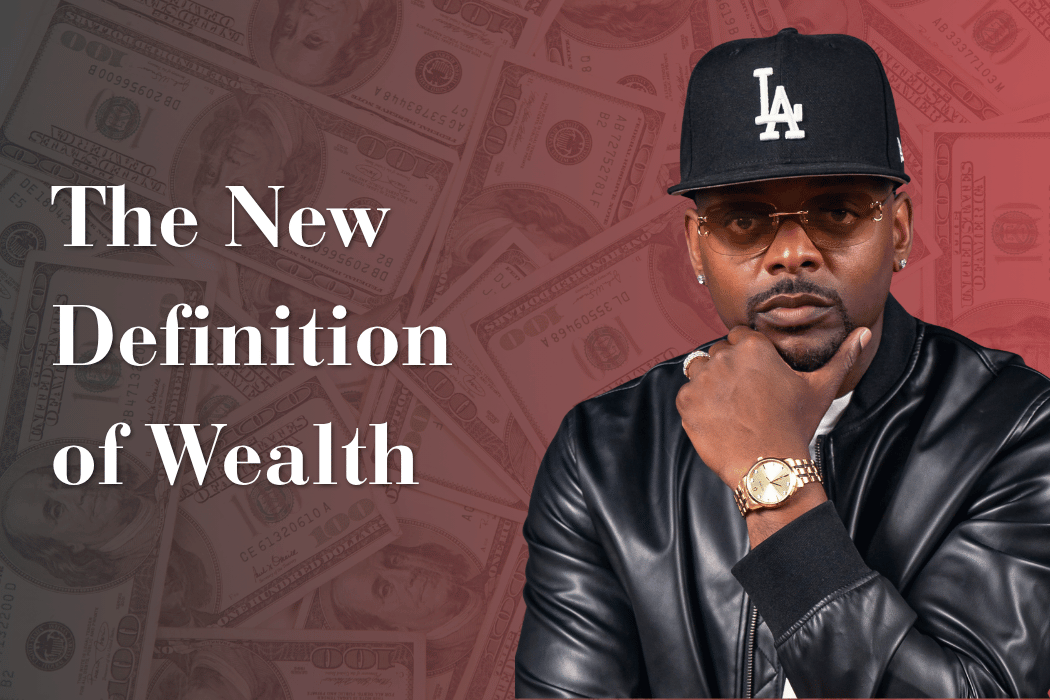
The self-made investor who retired at 35 says real wealth was never about the number in your account. It’s about what you do for the people who never had a seat at the table.
Chris Sain, Jr. remembers the number: $250. Not $250,000. Not a stock tip or a secret formula. Just $250 a month, set aside after the bills were paid, dropped quietly into a brokerage account most people had never heard of.
That small, boring decision changed his life. Today, Sain is known as a finance creator, a sports and technology investor, and a financial educator who has helped millions of people learn how to invest. He retired at 35. He built an ecosystem that reaches everyday people, celebrities, engineers at Google, and nurses on double shifts. And every year, he gives away $1 million of his own money through his 100 Days of Giving initiative.
But in a conversation with MBE magazine, Sain made one thing clear: the money was never the point. Wealth, he says, is not something you build for yourself and stop there. It’s something you build so you can open doors for people who were never handed a key.
An Athlete’s Wake-Up Call
Sain’s path into financial literacy started with heartbreak, not ambition. As a former athlete, he watched players from his own community reach the highest level of sport, only to lose everything a few years later.
“Any professional athletes in general go broke three to five years after their playing career,” Sain says. “That just piqued my interest.”
He noticed something deeper, too. Many athletes from underserved communities had wrapped their whole identity into one label: football player, basketball player. When the game ended, they didn’t know who they were, and no one had taught them what to do with the money they’d earned. So Sain went looking for answers. He studied the stock market, mastered investing, and built himself into a teacher his community could actually trust.
“I wanted to be the voice for the culture,” he said, “but more importantly the voice for the people, helping everyday athletes and individuals invest and build wealth in the stock market.”
Wealth Starts With $250, Not $250,000
Ask Sain the biggest myth about building wealth, and he answers fast: people believe it takes a lot of money to start.
“For the longest time, they have portrayed the stock market and wealth as something only reserved for the one percent of the world,” he says. “That couldn’t be the farthest thing from the truth.”
Sain and his wife started with $250 a month, the leftover cash after bills, debt, and expenses were paid. They didn’t put it in a savings account. They put it into a brokerage account, the kind offered by Vanguard, Fidelity, Charles Schwab, or newer apps like Robinhood.
He points out that $250 is close to what many people spend without thinking twice: a pair of Jordans, a night out, a concert ticket. Put toward a company you believe in instead, he says, and that same $250 can eventually grow into $10,000. The habit matters more than the amount.
“It’s about changing that mindset,” Sain says, “getting individuals to understand: start with what you got, and even if it’s small, it’s okay.”
Business Owners Must Pay Themselves Twice
For entrepreneurs, Sain sees a common tension. How much to reinvest in the business, how much to invest personally, and how much to keep in the bank to survive.
His advice starts with the business itself. Put money back into equipment, tools, and whatever helps the company run better. But once that’s covered, he says every business owner needs a solo 401(k), sometimes called an individual 401(k) or SEP IRA.
Unlike a workplace retirement account, which caps contributions around $23,000 a year, a solo 401(k) lets a business owner contribute as both the employer and the employee, up to $68,000 a year. That means the business isn’t just paying its bills. It’s paying the owner’s future.
“When you invest back in your business, it’s just money going to you and your future self,” Sain says. Most major brokerage firms, including Fidelity and Vanguard, offer these accounts.
Ownership Is the Real Flex
Sain believes the shift the Black community needs most isn’t about earning more. It’s about owning more: homes, businesses, and investments, instead of only income.
He points to his own life as proof. In 2016, he bought a 2015 BMW on Black Friday for $15,000, paid in full. No car note. No interest. For the years since, the money that would have gone toward a monthly payment went into his investment accounts instead, compounding quietly in the background.
“Ownership is the key,” Sain says. “Making decisions like that, small ones but major ones, is one of the key things that gets your mindset shifted toward financial freedom, financial independence, as opposed to constantly being in this rat race.”
A Million Dollars, No Strings Attached
Six years ago, Sain and his wife started something they call the 100 Days of Giving, a hundred-day stretch each year where they personally show up in communities across the country and hand money directly to nonprofits, small businesses, and everyday people doing the work.
Sain remembers being overlooked for funding for 20 years while serving his own community. He never forgot it.
“To whom much is given, much is required,” he says. “I try to just look for individuals and organizations that I know are doing the work, that I know people can vouch for.”
Unlike traditional grants, Sain’s gifts come with no restrictions and no mountain of paperwork. He trusts the people he funds to know what their community needs better than he does.
“I want to give unrestricted dollars so that the people can go meet the need that they see,” he says. “We don’t have to know you to bless you.”
Among the people he’s helped: roughly 100,000 women who lost jobs after companies rolled back diversity, equity, and inclusion programs. Sain said he stepped in to support many of them directly, one relationship at a time.
Why Chris Sain Believes Wealth Means Nothing Alone
This is the core of Sain’s new definition of wealth. Earning money is a starting point, not a finish line. Investing is a tool, not a trophy. The real measure of success, he says, is what a person does once they have the capital, the knowledge, and the platform to help someone else move forward.
Sain holds both a bachelor’s and a master’s degree in social work, and he says that background never left him. He still talks to people every day, not just about money, but about the financial trauma that keeps so many from ever putting that first $250 away.
“I’ve been able to build an empire around teaching people how to invest and build wealth in the stock market,” he says. “But you’ll be surprised how many prominent people don’t know this information. They just may have a position of power, a title of power.”
That’s why his message reaches far beyond athletes now, pulling in engineers, surgeons, truck drivers, and traveling nurses who all want the same thing: to finally understand what to do with the money they’ve already earned.
Where to Find Chris Sain
Sain shares his investing lessons and community resources at ChrisSain.com, along with his social media platforms under his own name. He says the goal has always been simple: make wealth-building feel possible for people who were told it wasn’t meant for them.
“Making these connections and just getting the word out one person at a time is what I’m trying to do,” Sain says. “I know that there’s somebody out there that sees and knows the impact we’re making.”