For years, minority-owned businesses, particularly those led by Latino founders like me, have been framed through the lens of potential: emerging, underserved, on the rise.
But the latest data tells a different story. According to the Stanford Latino Entrepreneurship Initiative (SLEI), Latino-owned businesses are among the fastest-growing segments of the U.S. economy, generating over $3.2 trillion in annual economic output. Just as remarkable, the number of Latino-owned employer firms has grown at a rate far outpacing the national average, with a steady increase in businesses surpassing $1 million in annual revenue.
This demonstrates that we are not in early-stage momentum; we are scaling. And yet, what is most compelling about this moment is not just the growth itself; technology and a different mindset have accelerated this transformation.
The Stanford data highlights a critical shift: Latino founders are increasingly entering high-growth, technology-driven sectors, moving away from the narrow industry concentration that historically defined minority-owned businesses. At the same time, many of us are launching multiple ventures, expanding into new geographic markets, and prioritizing long-term positive impact over short-term gains.
This is a fundamentally different model of entrepreneurship, one that is more expansive, adaptive, and aligned with the realities of a rapidly changing, innovation-driven economy. Digital platforms, AI, and new distribution channels have redefined what access looks like. Where capital once determined reach, today visibility, narrative, and community can generate their own form of impact.
We are actively building within this shift, developing ecosystems and influence at scale, often outside of the traditional gatekeepers that historically dictated growth. However, while access has expanded, equity has not yet fully caught up. This is where intentional ecosystem-building becomes critical.
At the center of this work is our impact work with IOScholarships, a fast-growing national platform supporting over 10,000 underrepresented multicultural STEAM talent, focused on expanding access to education, mentorship, and career pathways in technology and innovation. Through this platform, we are not only connecting students to opportunities but also actively shaping a more inclusive pipeline of future talent.
As part of this vision, we are convening leaders, educators, and innovators at the 2026 IOScholarships STEAM Innovation Summit powered by Bravo Story on August 29th at the Miami Convention Center, a gathering designed to bridge education, workforce development, and industry. The summit serves as a catalyst for collaboration, bringing together organizations that are preparing the next generation with in-demand technical skills and real-world exposure.
Expanding access to capital and growth opportunities is critical to sustaining entrepreneurial momentum, especially given the significant role we play in uplifting our national economy. Organizations such as the National Minority Supplier Development Council play a critical role in bridging gaps and connecting often overlooked minority-owned businesses like mine to larger corporate procurement opportunities and opening up the access to capital that we need.
As highlighted in the “2024 NMSDC Minority Businesses Economic Impact Report,” MBEs are vital to our economy and serve as engines of innovation, resilience, and generational wealth. With nearly $600 billion in total production, over 2.2 million jobs supported, and $168 billion in wages earned, NMSDC-certified MBEs continue to drive prosperity in historically underserved communities.
Organizations like NMSDC are not just support systems; they are accelerators. They connect momentum to opportunity, translating entrepreneurial energy into enterprise-scale impact. And in doing so, they reveal what is possible when access meets execution.
Multicultural entrepreneurs, like me, are not just participants in the market; we are increasingly defining it. We are closer to demographic change, more attuned to cultural nuance, and better positioned to serve the next generation of consumers. Our businesses are not only growing; they are influencing how growth itself happens.
This is no longer about representation. It is about scaling, engagement, and economic impact. The question, then, is whether we will continue to rise. The NMSDC Minority Businesses Economic Impact Report data makes that trajectory undeniable.
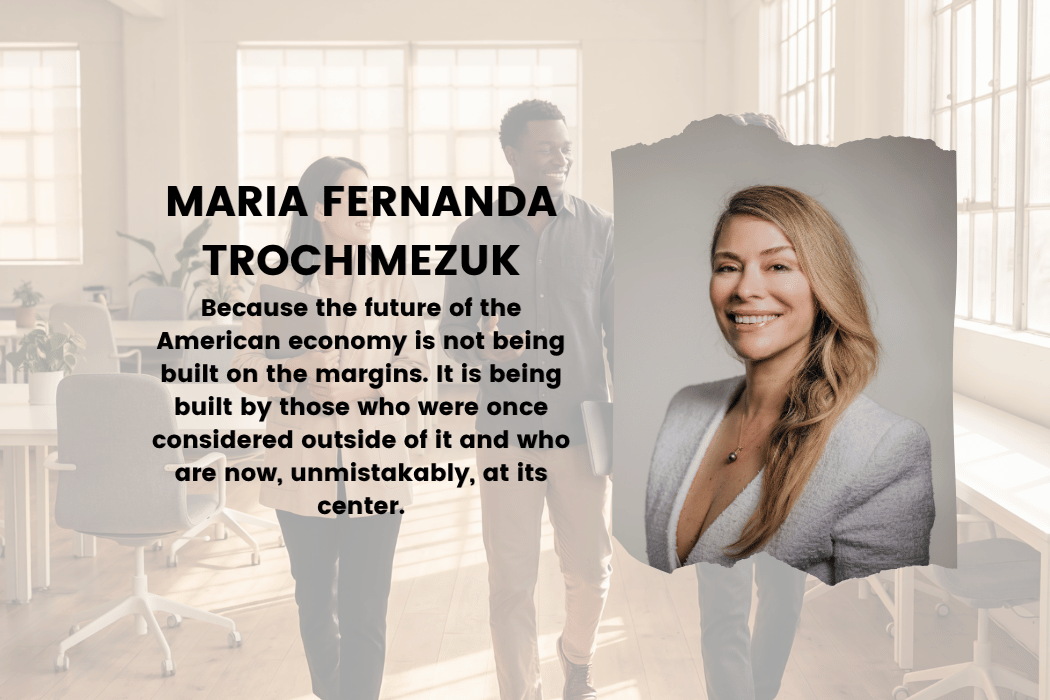
Because the future of the American economy is not being built on the margins. It is being built by those who were once considered outside of it and who are now, unmistakably, at its center.