
This Franchising education series is brought to you in partnership with Prexsentials LLC, a legal and business advisory firm. Learn more at www.prexsentials.com or email them at carlos@the-impactor.com.
James Thompson spent 30 years asking that question in corporate meetings. Then he retired, discovered a hidden financing trick most people don’t know exists, and launched a multi-state franchise operation—without taking out a single loan.
James Thompson sat in another corporate meeting, thinking the same thought he’d had a thousand times before: “Who put this guy in charge?”
After nearly three decades in the corporate world, managing multi-billion-dollar projects and supply chain operations, Thompson knew he could make better decisions on his own. When COVID-19 hit and his company demanded everyone return to the office, he saw his opening.
“I gave them a seven-month notice,” Thompson recalls. “I said I’ll be out of here come January 2nd.”
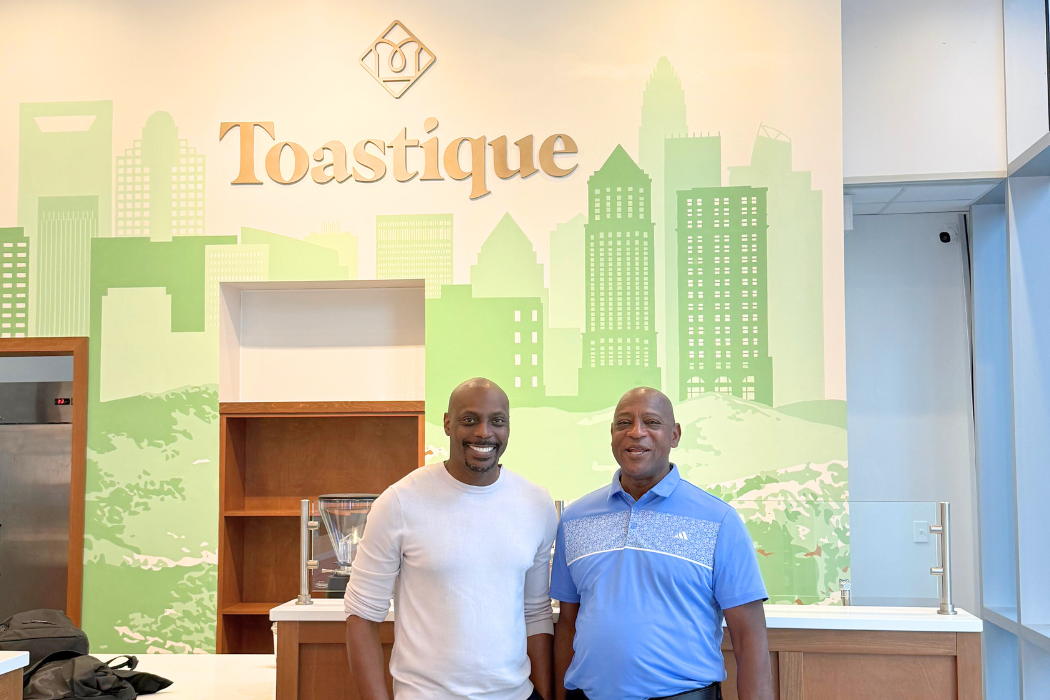
He wasn’t kidding. With a pension and annuity ready to support him, Thompson retired early. But sitting around wasn’t in his DNA. Within two years, he would launch Fit and Fresh Corporation, secure a five-unit franchise agreement with Toastique, and position himself to become a major player in airport concessions—one of the most competitive and historically exclusive sectors in the business world.
The Wake-Up Call at a Franchise Event
Thompson’s path to franchise ownership started at a local event about franchising. As he listened to speakers talk about athletes who’d built wealth through multiple franchise locations, something clicked.
“It was a clue to me,” Thompson says. “Here’s an opportunity where you can gain wealth you can leave for your family members later on down the road.”
His son-in-law, a major manager at HMS Host in the Charlotte Airport, had been exploring business ideas with him. The two spent months researching options, attending franchise meetings across Dallas-Fort Worth, and studying financial disclosure documents. Thompson wanted to understand exactly where he was putting his money.
Then came the moment that changed everything. While taking Thompson’s granddaughter to college in Atlanta, his son-in-law spotted a small restaurant called Toastique. He’d never heard of it before, but something made him stop in and try it.
“He fell in love with it,” Thompson explains. “It’s a healthy choice restaurant that serves gourmet toast, coffee, and smoothie bowls, along with healthy juice made from scratch.”
Meeting the Founders Who Bet Everything
After months of research and meetings with Toastique’s franchise team, Thompson and his son-in-law received an unexpected invitation. The founders wanted them to visit the corporate offices in Washington, D.C.
Thompson almost said no. He figured it was a high-pressure sales tactic. But what he found instead was a story that inspired him to take the leap.
Brianna Keefe, who started Toastique, was only 29 years old and had zero business experience. All she knew was how to make amazing gourmet toast. Her boyfriend, who had a background in commercial real estate and construction, believed in her so much that he emptied his entire 401k without telling his parents.
“Just hearing their stories was incredible,” Thompson says.
As they toured the different Toastique locations and saw how the business operated, Thompson noticed something else that caught his attention. Unlike traditional restaurants that need expensive ventilation systems, Toastique’s main equipment requirements were toasters and juicers. That meant lower startup costs and faster opening times.
“You’re talking about $1.5 to $2 million before you get started with Chick-fil-A or McDonald’s,” Thompson points out. “The entry point was a lot cheaper.”
The Financing Nightmare Every Minority Business Owner Knows
Thompson attended about 25 different franchise sessions throughout the Dallas-Fort Worth area. At every single one, he heard the same story from other minorities: getting financing is nearly impossible.
“Even if you’re the perfect type of franchise, part of the challenge is, if you’ve never done it before, it’s going to be hard to get the Small Business Administration loan,” Thompson explains.
He went to 15 different banks. Most turned him down or told him he wasn’t ready. Meanwhile, Brianna Keefe had gotten construction financing for her first location without even having a business plan.
The contrast wasn’t lost on Thompson. But he refused to give up.
In June, his daughter convinced him to attend Bishop T.D. Jakes’ Good Soil conference. Thompson didn’t want to go, but Wells Fargo was sponsoring the event and announced they were willing to work with anyone pursuing SBA loans.
Thompson gathered all his financial information and developed a detailed business plan. He was ready to submit everything when the government shut down, freezing SBA loan applications.
That’s when Toastique offered him a different opportunity. An existing franchise owner needed to sell their Charlotte location due to family health issues. The selling price was actually lower than starting from scratch, and Thompson could be operational in three months instead of waiting 14 to 16 months for a new build-out.
The ROBS 401k Solution: Using Retirement Funds Without Penalties
With the SBA office shut down and an immediate opportunity in front of him, Thompson discovered a financing option many people don’t know exists: ROBS 401k Business Financing.
ROBS stands for Rollover for Business Startups. It’s a way to use retirement savings to fund a business, completely tax-free and penalty-free, as long as you’re using it for a startup or new business.
“The government allows any startup business to take funds from their 401k tax-free,” Thompson explains. “That’s how I financed this opportunity.”
Thompson used his own 401(k) funds, and his son-in-law’s father leveraged his retirement account as well. Together, they formed a partnership to acquire the Charlotte location.
“We have no outstanding loans whatsoever to get this started, which is great,” Thompson says. “That’s unheard of.”
The arrangement gave them complete ownership without the burden of monthly loan payments. It was a game-changer that let them move quickly and maintain control of their business.
Building a Team with 75+ Years of Combined Experience
Thompson admits he has zero restaurant experience. But he knows exactly what he brings to the table: project management expertise from managing major corporate initiatives.
His son-in-law, who will serve as director of operations, has 25 to 30 years of experience running restaurants for major brands across the country. Thompson’s daughter brings strategy and marketing skills, plus expertise in AI and technology.
“We’re leveraging all the key resources of our family to move forward with this venture,” Thompson says.
Before the Charlotte location opens in January 2026, Thompson spent three weeks at Toastique’s corporate training in D.C. Despite having no restaurant background, he learned everything—prepping, cutting, creating orders, working the cash register, and making products.
“They want anyone who’s an owner to go in and dig deep on how their restaurant brand is operated,” he explains.
The Airport Concessions Gold Rush
Thompson’s real vision extends far beyond a single Charlotte location. He signed a five-unit agreement with Toastique, and his sights are set on airports—particularly Dallas-Fort Worth, which has major expansion and construction planned over the next four to five years.
“One of the key benefits of airport concessions is you probably have 10 million people that go through a gate area per year,” Thompson notes. “You don’t have to worry about trying to go out and look for business.”
But breaking into airport concessions as a minority business owner comes with massive challenges. Thompson describes it as “all about politics”—making relationships and connections with key players at different airports.
“For African-Americans, well, for minorities, it’s been historically difficult to get access to that,” he acknowledges.
The major airports are typically controlled by large concession companies like HMS Host. In Charlotte, HMS Host runs virtually every restaurant and concessionaire in the airport. In Houston’s Bush Intercontinental, two major companies control the entire operation.
“It’s building those relationships and just getting your foot in the door,” Thompson says. “It’s extremely difficult.”
That’s why securing the Charlotte location first was so strategic. When Thompson approaches airport authorities or potential partners, the first question they ask is: “Where are you operating now?” Having a successful location under his belt gives him credibility and proof of concept.
Thompson plans to join the Airport Minority Advisory Council (AMAC) next, recognizing that collaboration with other minority business owners will open more doors.
Technology: The Secret Weapon for Scaling Fast
Thompson’s corporate background working with ERP software systems like SAP and Oracle taught him the value of technology in scaling a business efficiently.
“Every single one of those products allow you to scale fairly quickly and provide real-time information on how well your particular business is running,” he says.
During his training at Toastique, Thompson noticed the company was still using manual processes as it grew to 50 locations. For example, when prepping food, employees had to use masking tape and markers to label containers with preparation dates and expiration times. The process took three to five minutes per container, and the tape often didn’t stay attached.
Thompson immediately recognized the inefficiency. Large restaurant companies use handheld devices that automatically generate and print labels in seconds.
“Leveraging technology is pretty pricey, but everyone should incorporate technology in their brand,” Thompson advises.
His daughter demonstrated this during a recent meeting when an opportunity came up for a juice and smoothie bar in an airport corridor. Using AI tools, she instantly generated a visual mockup of what a Toastique location would look like in that space, complete with the brand elements and proper square footage.
“Within a matter of seconds, I saw a copy of that,” Thompson marvels. “It had the brand and everything.”
A Personal Health Mission Behind the Business
For Thompson, Toastique isn’t just a business opportunity. It’s personal.
As a Type 2 diabetic who wears a continuous glucose monitor, Thompson constantly watches his blood sugar levels. He’s always looking for food that keeps him in a healthy range.
During his three weeks of training in D.C., he ate at Toastique every day while working. Everything he consumed—from the gourmet toast to the juice bars to even the chocolate they make in-house—kept his sugar levels stable.
“I was just amazed,” he says. “It went up a little bit, but it was always in range.”
This experience reinforced his belief that Toastique could be a game-changer for the African-American community, which faces higher rates of diabetes and diet-related health issues.
“It’s all healthy, low sugar, anyone can eat it,” Thompson emphasizes. “We think it’s a game changer, especially for African-Americans that eat unhealthy.”
The Ray Mickens Model: From One Kiosk to Empire
Thompson draws inspiration from Ray Mickens, a former New York Jets player from the Dallas area who shared his franchise story at a local event. While still playing professional football, Mickens started selling popcorn from a single airport kiosk, just to learn how the business worked.
After leaving football, Mickens grew his operation to include one or two major brands that built significant wealth for his family.
“And I’m going down the same path,” Thompson says. “Once you have everything in place and get all the key family members trained, it will grow by itself.”
He’s studied how athletes like Hakeem Olajuwon and Shaquille O’Neal built franchise empires. They acquire multiple franchise brands, put them under one umbrella, and let experienced teams run them. Long-term, it creates enough wealth for entire families to live off indefinitely.
That’s the vision for Fit and Fresh Corporation. Thompson doesn’t plan to stop at five Toastique locations. He wants to expand into other franchise brands, all managed under one company, all building generational wealth for his extended family.
The Fast-Paced Timeline Ahead
Thompson’s plan is aggressive but clear. Get the first Charlotte location up and running. Stabilize it within five to six months. Hire someone to oversee operations based on the standards they’ve established. Then move on to the next location and grow quickly.
Other family members are already being brought into the venture, each contributing their unique skills and experiences.
“That’s our goal,” Thompson says simply.
The Charlotte location has a strategic advantage—there are no other Toastique locations in the area. The nearest one is in Raleigh, giving them room to build brand awareness and customer loyalty without immediate competition.
Advice for Aspiring Minority Franchise Owners
Thompson’s journey offers several clear lessons for other minorities considering franchise ownership:
Do your research thoroughly. Thompson attended 25 franchise sessions, studied financial disclosure documents, and spent months evaluating different brands before committing. That due diligence gave him confidence in his choice.
Know your financing options. SBA loans are difficult for first-time minority franchisees, but ROBS 401k financing offers an alternative that many people don’t know exists. Explore every avenue before giving up.
Build the right team. Thompson had no restaurant experience, but his son-in-law had 25-30 years in the industry. His daughter brought marketing and tech skills. Together, they covered all the bases.
Leverage technology from day one. Thompson’s corporate background taught him that technology creates efficiency and allows rapid scaling. Don’t wait to implement systems that provide real-time business insights.
Network constantly. From the Good Soil conference to franchise events across DFW, Thompson built relationships that opened financing doors and partnership opportunities. The airport concessions business runs on relationships.
Start with proof of concept. Thompson strategically chose to acquire an existing Charlotte location first, knowing that track record would be essential when pursuing airport contracts and additional locations.
The Bigger Picture: Changing the Face of Airport Concessions
Thompson’s story is about more than one man building a franchise business. It’s about changing who has access to some of the most lucrative retail spaces in America.
Airport concessions have historically been dominated by a small number of large companies, with limited opportunities for minority-owned businesses. Every success story like Thompson’s helps crack that door open a little wider.
By joining organizations like AMAC and building relationships with airport authorities, Thompson is positioning himself not just as a business owner but as a pathfinder for other minority entrepreneurs who want to compete in this space.
His company, Fit and Fresh Corporation, is now a certified Minority Airport Concessionaire, giving him credentials that matter in contract negotiations. His expertise in acquiring healthy franchise concepts and optimizing their presence in high-traffic locations creates a repeatable model.
The Legacy Beyond Business
When Thompson talks about his vision, he always comes back to family and legacy. This isn’t about getting rich quick. It’s about building something that lasts for generations.
“Once they see the impact, if you just follow the franchise rules and provide quality food, you’d be amazed how it can grow,” he says.
His granddaughter, whose college trip to Atlanta led to discovering Toastique in the first place, represents the future he’s building for. So do the other family members joining the venture, learning the business, and preparing to carry it forward.
Thompson walked away from corporate America because he was tired of not being able to make his own decisions. Now he’s not just making decisions—he’s creating opportunities for his entire family to build wealth and independence.
From that first franchise event where he learned about athletes building empires, to three weeks of training where he learned to make gourmet toast and smoothies, to opening his first location in Charlotte, Thompson has moved with purpose and strategy.
The five-unit agreement is just the beginning. Airport terminals across Texas are next. And beyond that, more franchise brands joining the Fit and Fresh portfolio.
“We want to be on a fast-paced timeline,” Thompson says.
For a man who spent 30 years watching other people call the shots, James Thompson is finally in charge. And he’s building something that will outlast him—one healthy, delicious piece of toast at a time.
DOWNLOAD THE FRANCHISING 101 MINI GUIDE
Don’t make expensive mistakes. Get our free Franchising 101 Mini Guide with everything you need to know before franchising your business, including the legal traps most entrepreneurs miss and tips for beginners.