
Starting this fall, parents and students face strict new borrowing caps, and Dr. Sonia Lewis, “The Student Loan Doctor,” says the government isn’t sharing the data behind the decision.
Dr. Sonia Lewis was flipping through her notes, and even she, a woman who has spent 10 years untangling student loan debt for thousands of families, could barely keep up with how much had shifted. “So much change,” she says. “So many changes.” That is the world parents are stepping into right now. Many entrepreneurs raising the next generation are also trying to send their children to college, and a new law is about to make that harder for a lot of them.
The law is called the One Big Beautiful Bill Act. Most families have heard the name in passing, but few understand what it actually does to their wallets. Dr. Lewis, founder of The Student Loan Doctor, broke it down in plain terms, starting with the number that matters most: how much a family can actually borrow.
What Changed on July 1
If your child is already in college, breathe easy, because the old rules still apply to you. But if your child is starting school for the first time this fall, the ground just shifted beneath them. Parents can now only borrow $60,500 total for each child, for life. That sounds like a lot of money. It isn’t. “That money could be spent just alone on a bachelor’s degree,” Dr. Lewis says. Families hoping to help a child through a bachelor’s degree, then a master’s, then a doctorate, will likely run out of room long before the finish line.
Students face their own cap, and it comes with hidden strings attached. They can borrow up to $232,000 in their lifetime, but certain degree programs come with tighter limits on top of that number. A student eyeing an MBA, a law degree, or a medical degree may not be able to borrow enough to cover the true cost of getting there. “A medical degree, you can borrow up to two hundred thousand,” Dr. Lewis explains. “But most medical programs cost more than that. And just think about cost of living; particularly our minority students are utilizing this money for room and board, and also living expenses.”
Add rent, food, and books to tuition, and the new limit stretches thin fast. For a student hoping to stack two advanced degrees, like a J.D. and a Ph.D, the math may simply not work anymore, and that is a hard truth for ambitious families to absorb.
Why the Government Won’t Show Its Work
Here is what troubles Dr. Lewis most: the people who wrote these new limits never showed the public any data to back them up. “They did not use data to make these decisions,” she says. “If they would have come out and said the data show when you study these fields the default rate is this, or the lack of repayment is that, they didn’t lead with that data because it’s not available.” Dr. Lewis has looked for that data herself. She is currently studying student loan debt for her Ed.S. degree, focused on how loan debt affects African American women, and she says the numbers on who borrows and who defaults are hard to find, and getting harder by the year.
A website called the National Student Loan Database used to let anyone look up loan information for free. Now access is limited to administrators and government staff only, which means the very families carrying this debt can no longer see the full picture of it. “Why is that data private?” Dr. Lewis asks. “The challenge here is when there’s a lack of transparency, it doesn’t allow the consumer to really understand what they have or what they can utilize in terms of public monies.” Without that transparency, families are left guessing, and guessing is an expensive way to plan for college.
From Church Basement to National Movement
Dr. Lewis didn’t plan to become the Student Loan Doctor. Her background is in higher education, where she worked in admissions, financial aid, and adult learning, and her master’s degree is in higher education and adult curriculum design. Her real education started somewhere else entirely: a financial literacy class at her church in Philadelphia, which she couldn’t afford upfront. So, she asked for a payment plan the church had never offered before. “I asked him, what would Jesus do,” Dr. Lewis says. “I believe he would give me a payment plan of twenty dollars over five weeks.”
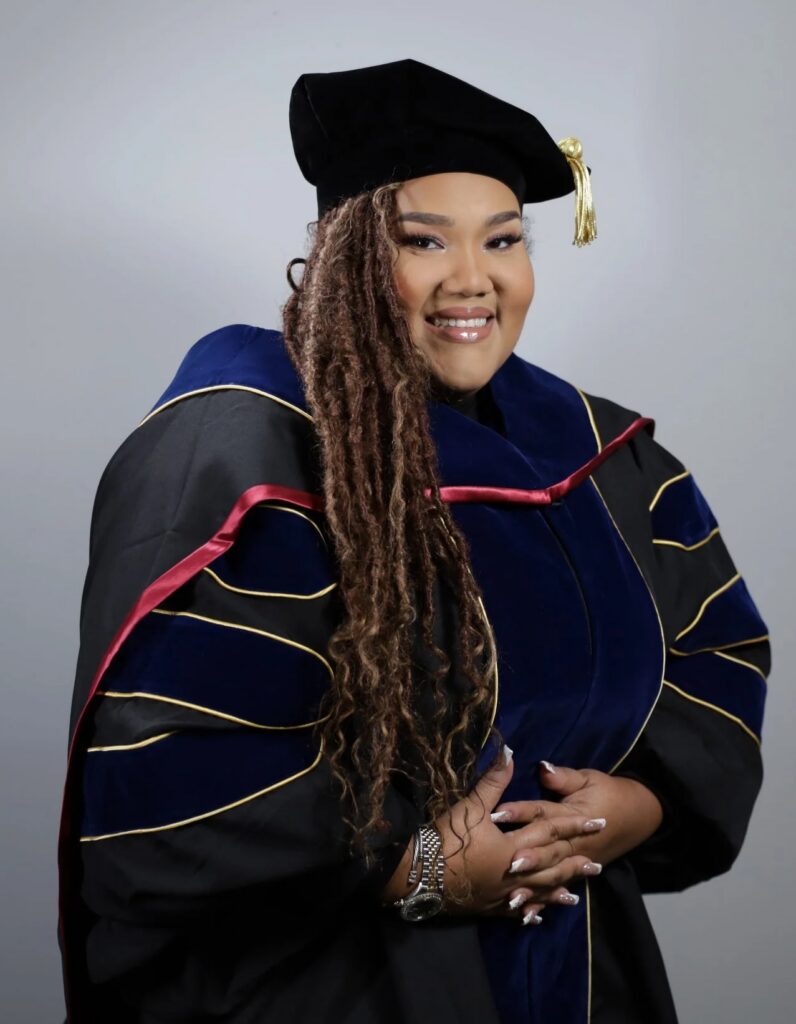
They agreed, and inside that class, Dr. Lewis understood student loans better than anyone else in the room, including the instructor. Word spread fast. People from church started asking her questions after service, then friends of friends, then strangers she had never met. She began meeting people at Corner Bakery, coffee in hand, laptop open, answering questions for whatever she could charge. Within a year, she turned it into a real business, and then a feature on The Shade Room sent her small operation into a new stratosphere almost overnight.
Ten years later, her reach is nationwide. During the Biden administration, her team went live on Instagram once a month with federal officials to share loan forgiveness updates directly with the public, a first-of-its-kind partnership between a private organization and a government agency. Today, she still teaches free classes every Monday night at 8 p.m. ET, which she calls “the class you never had.” Sessions run 90 minutes and cover repayment plans, forgiveness options, and the latest rule changes. “My philosophy is that money in student loans will probably be keeping you up at night,” she says. “So, I should go while you’re up.” One student in her paid program came to her with almost $1 million in loans across himself and his two children, all training to become doctors, and her team helped get the debt forgiven.
What Families Can Do Starting Today
Dr. Lewis’s advice isn’t just for parents of high school seniors. She wants families to start planning while their children are still in middle school, and she has two concrete places to begin. Her first recommendation is to stop treating scholarships and grants like a last resort, and instead search for them early and often, including smaller, community-based awards that get overlooked in favor of athletic scholarships. Her second recommendation is to rebuild the habit of community giving. “Your $1,000 scholarship could be the gap for someone,” she said, noting that broken into monthly pieces, that is roughly $83 a month, an amount many small business owners could set aside for a local student without much strain.
Dr. Lewis knows this firsthand. Her own high school principal helped her raise $16,000 in donations after her family missed a financial aid deadline, and Dr. Lewis has since given back to that same high school, more than $19,000 over the past two years. “I’m not super rich or anything,” she says. “I just do well. But if I could be mindful to say I want to put my money this way, then it’s going to help someone.” Her last piece of advice may be the hardest for proud families to hear: ask for help. “People are almost like, I don’t know where to start, embarrassed to ask for help,” she said. “That’s weird. We have to let that go.”
Your Vote Is Part of the Plan Too
Dr. Lewis doesn’t want families to feel stuck, and she points out that the current administration has two years left in office, which means the rules families are wrestling with today can change again. “What changes have been made can be undone with the next administration if we vote correctly,” she says. She encourages younger generations especially to stop treating politics as background noise, since voting, volunteering at the polls, and showing up for local campaigns all shape whether the next set of loan rules helps families or hurts them. “It sometimes takes someone like this in office to show you what could happen when you don’t show up,” Dr. Lewis sats.
Where to Find Free Help
Every Monday at 8 p.m. ET, Dr. Lewis teaches a free class at freesldclass.com covering the newest student loan updates, repayment options, and forgiveness programs. Her audience spans every age and background, from twenty-somethings to grandparents in their eighties, and she also shares daily updates on Instagram under The Student Loan Doctor. Her message to any family feeling behind is simple: showing up is the whole point. “Don’t feel bad if you don’t come over,” she says. “But it’s a safe space over here.”